Blog
Here you can discover the latest news, trends, and inspiring stories from the world of dance, read interviews with artists, and explore analytical reviews and professional tips.
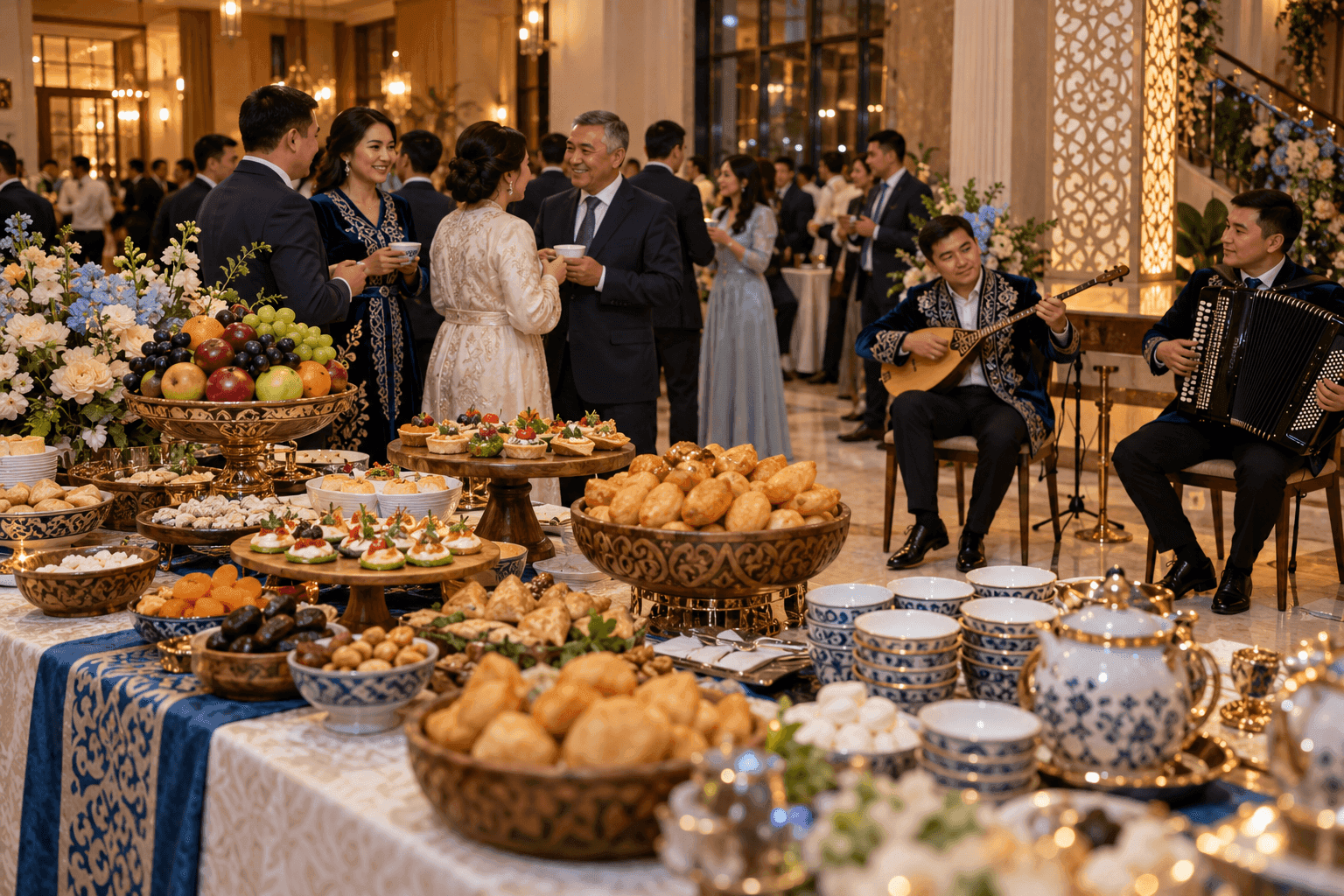
In the first part of our organiser's advice, we explained why a wedding welcome buffet deserves careful attention. Its appearance and presentation shape the first impression of the evening. Now it is time to consider the final touch: the tradition known as Keter Ayaq or Zhol Ayaq. This small ritual takes place at the end of the celebration. Sometimes it uses the same table that held the welcome buffet earlier in the evening. In an alcohol-free celebration, the tradition can be reinterpreted while preserving its most important purpose: seeing guests off with warmth, care and hospitality. The bride has thrown her bouquet, the band has taken the stage, and the second dance interval reflects the newlyweds' own musical taste. The first interval may have featured familiar favourites for the parents' friends and older guests, while the later programme becomes younger and more energetic.
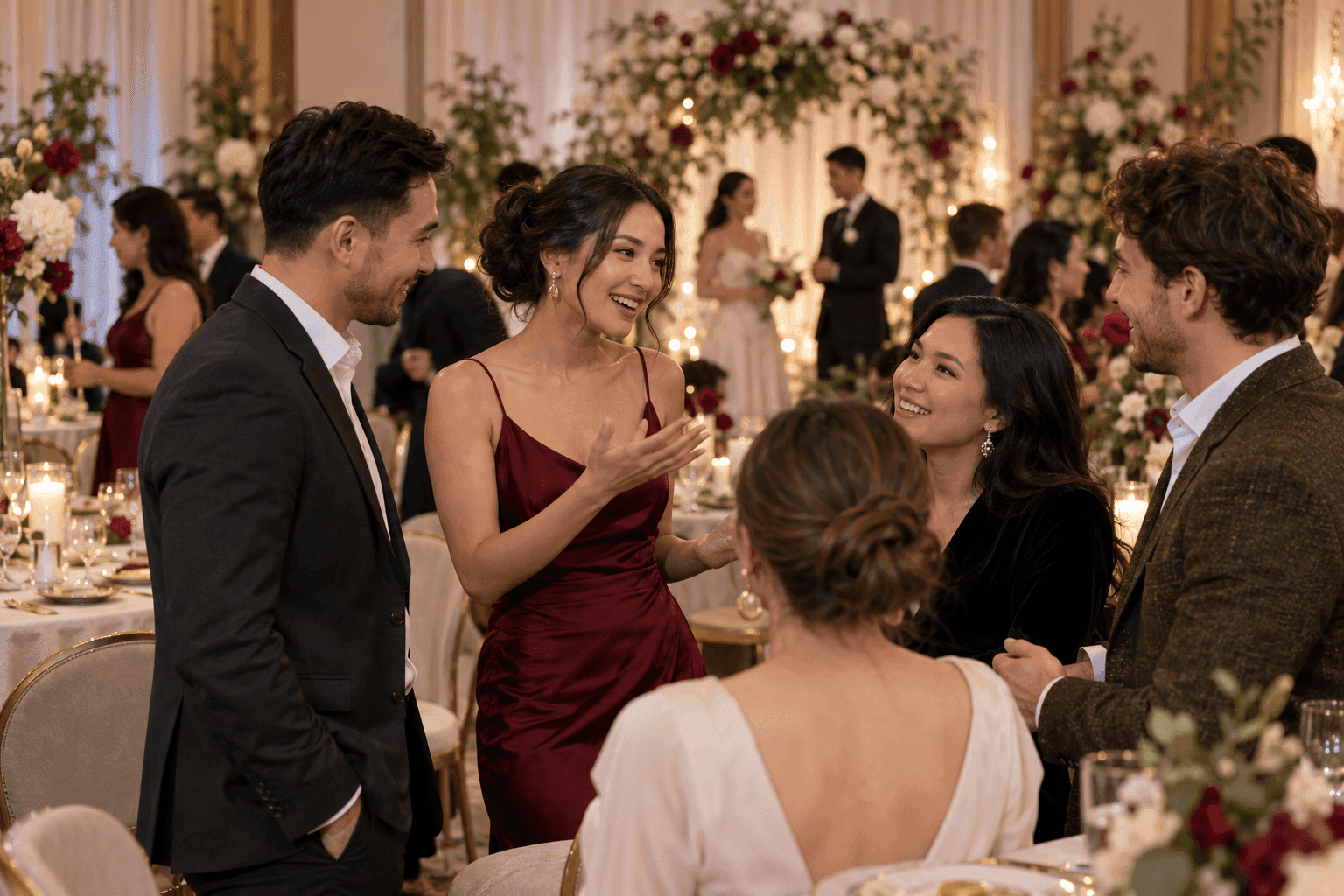
Imagine being invited to a wedding and asked to buy a ticket for 20,000-25,000 tenge. The price includes your seat, the menu, drinks, a host and live entertainment. There is just one surprising detail: you know neither the people at your table nor the names of the newlyweds. The bride and groom may not have met before the evening either. This is the idea behind “NOT a Wedding”, a themed party already appearing in selected cities across Europe and the CIS. From the outside, it looks like a real celebration, complete with a welcome buffet, decorations, dinner, toasts and dancing. Its purpose, however, is not marriage. It is designed for conversation, new connections and an unusual cultural experience. Modern city life offers too few natural and comfortable ways for adults to meet. Social media helps people stay connected, but it cannot always replace a face-to-face conversation. “NOT a Wedding” provides a familiar structure in which strangers can introduce themselves, exchange experiences and spend an evening together without the awkwardness of formal networking.
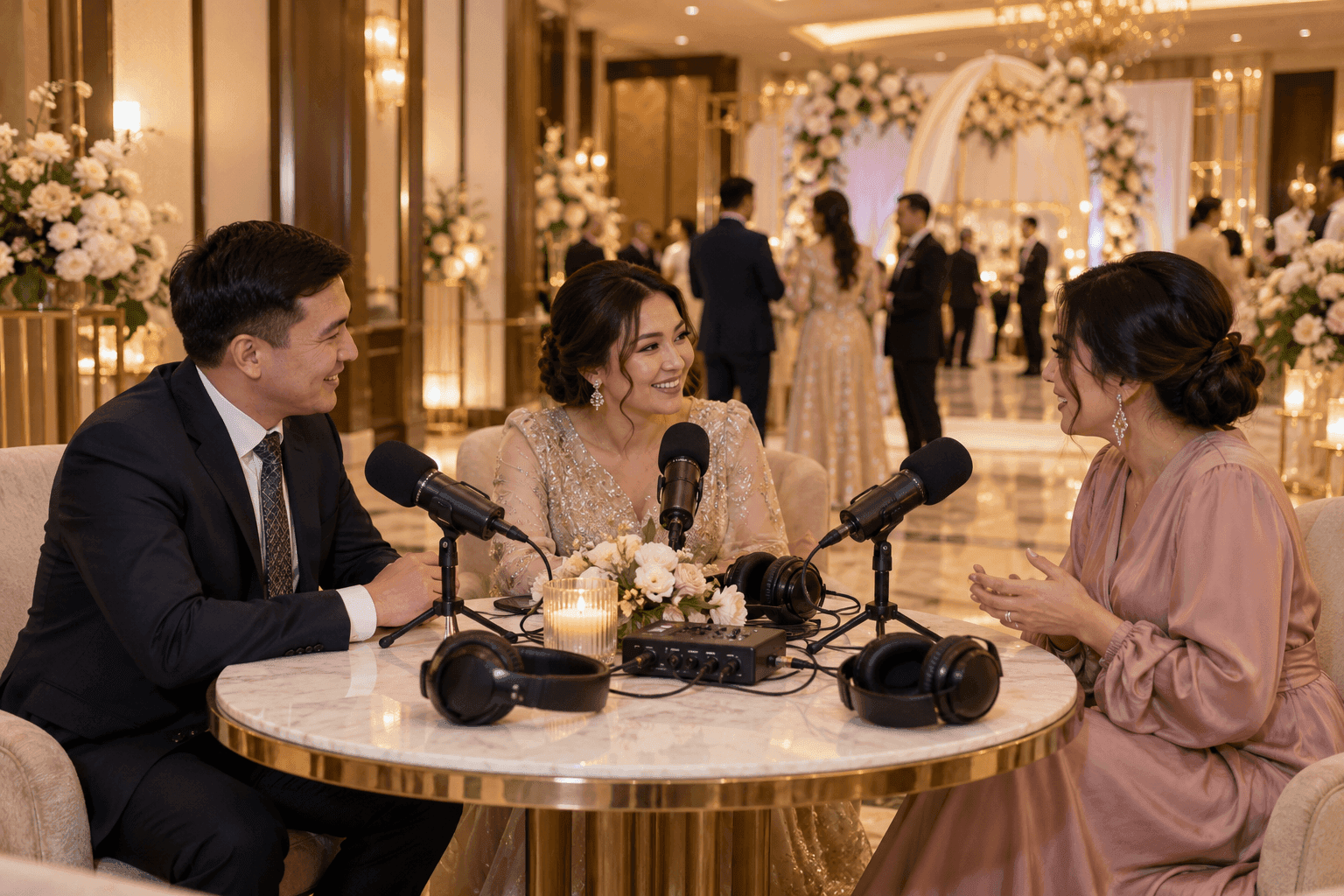
The wedding podcast is quickly finding its place in contemporary celebration programmes. The format began gaining attention in Kazakhstan at the end of summer, while the quieter autumn season gave organisers time to refine the idea for the year ahead. The DanceHub.kz team has already tested it twice and is ready to explain how it works. The podcast corner works best near the entrance to the banquet hall, close to the photo zone and welcome buffet. Recording inside the hall is more difficult: equipment is being checked, lighting and sound are being adjusted, and the service team is completing its final preparations. It is simply too noisy for a relaxed conversation. A small table, three microphones and a neat backdrop are enough to create the studio. Guests arrive, take commemorative photographs, enjoy the buffet and are then invited to record a short story about the newlyweds.
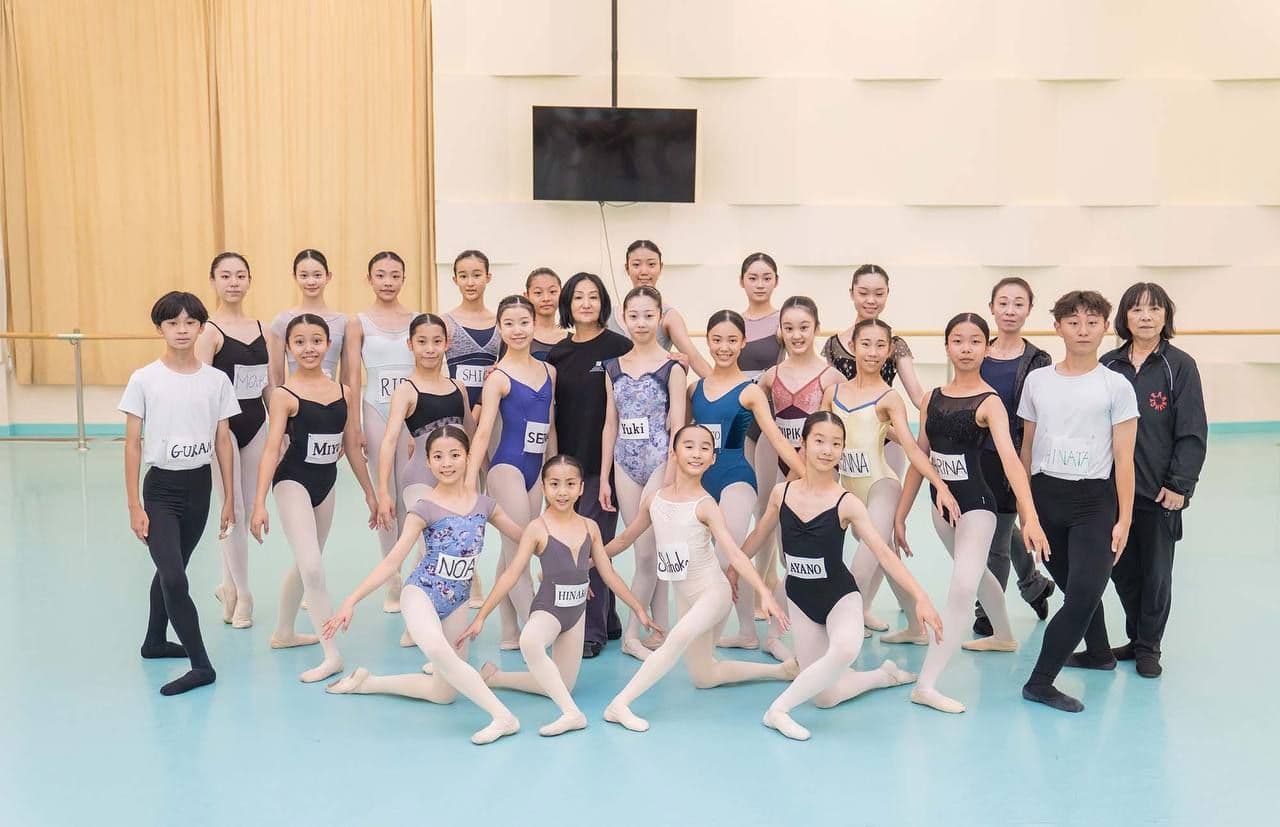
The Kazakh National Academy of Choreography has concluded an intensive programme for a delegation from Tokyo's Yoshiko Takagi Ballet School. Twenty-two students and four teachers travelled to Astana to explore Kazakhstan's approach to choreographic education, work with the Academy's leading teachers and exchange professional experience. The Japanese guests followed a focused educational programme. Young dancers took part in masterclasses in classical and folk-stage dance and worked on classical variations drawn from the world's ballet repertoire. Each class offered more than technical practice. It also allowed the students to view familiar elements through a different teaching tradition. For young artists, this kind of exchange broadens their professional outlook and encourages closer attention to every detail of stagecraft.

Kazakh toi parties are commonly called 'package' parties when they are organized using a ready-made set on the 'ALL Inclusive' principle. The package necessarily includes a lineup of theater performers, an evening host speaking both languages, sound equipment if needed, a musical group for a mini interlude, a mobile photographer, and an organizer. At first glance, the lineup might not seem very big, but as it turns out The practice of this set of participants is quite enough for a 5-hour Kazakh wedding. In the 'basic' segment, such a package rarely goes over 1,000,000 tenge, and if it’s more expensive, which also happens, it’s usually more packed. Some companies split their packages into 3 price ranges with a maximum cost of up to 5 million tenge. We got the most optimal package, up to 1,300,000. tenge. We were preparing for the bride's send-off – Kyz Uzatu. We decided on a restaurant already during the first family meeting, had some coffee, read reviews, went there, and made a reservation. The banquet issue was settled, so we could start working on the program. We also understood that there wasn’t much time to walk around, talk, and choose, so we started looking at package deals. It seemed that for the number of toasts we had, there weren’t enough “fillers”.
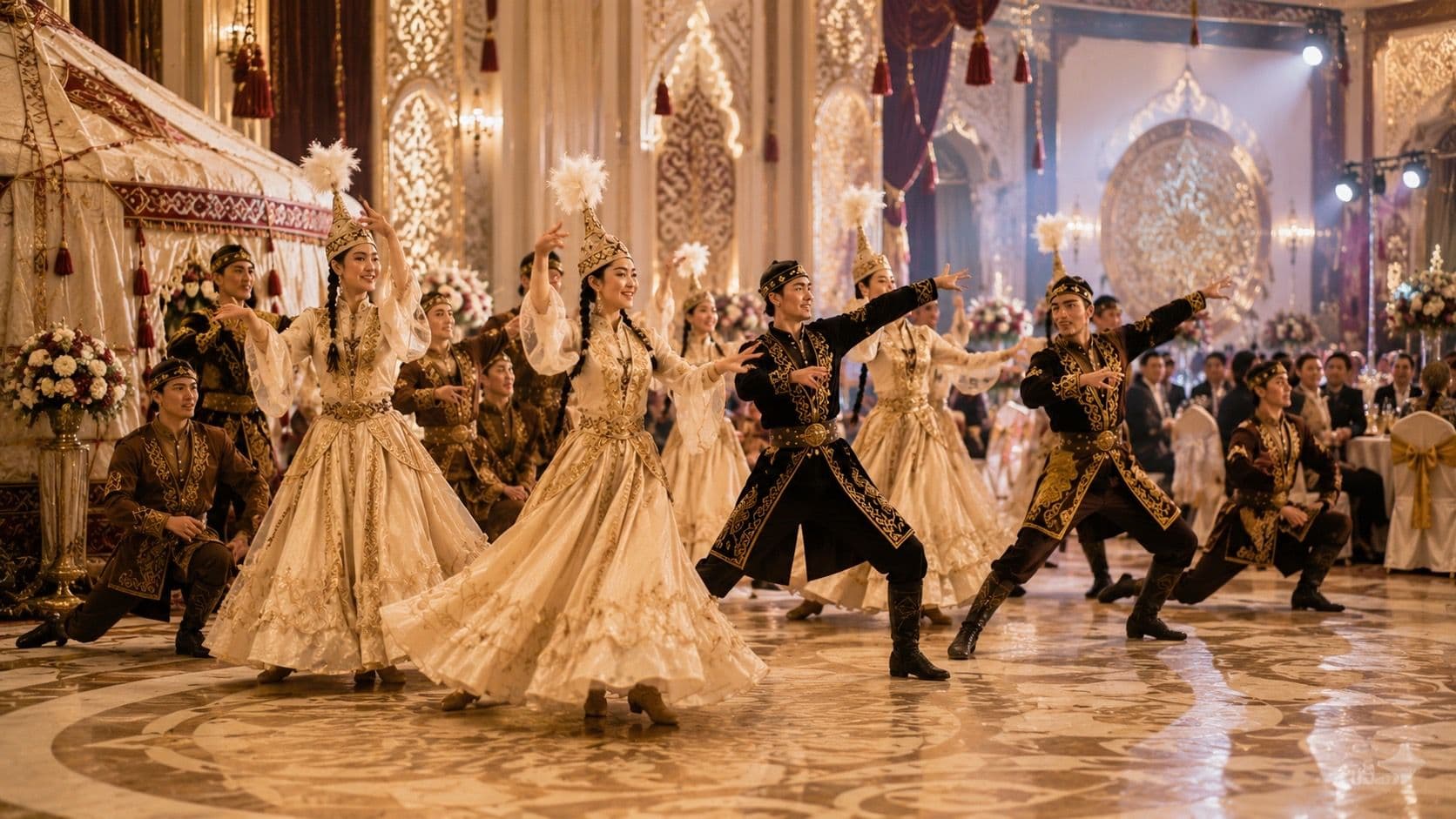
Today, the Kazakh national dance has become an integral part of weddings, anniversaries, tusaukeser, kyz uzatu, and other celebrations. Dance groups welcome guests, kick off the festivities, accompany national rituals, and turn family events into vibrant theatrical performances. However, the history of the national dance began long before the appearance of restaurants, concert venues, and modern Toy industry. Kazakh dance developed as part of the everyday life of the nomadic people. Through movements, a person could convey character, mood, depict hunting, horse riding, daily work, or animal behaviors. The dance didn’t have a strictly set sequence of movements: the performer improvised, guided by the music, the story, and the reaction of those around them. In traditional society, a song, Music, competitions, and dance were closely interconnected. During holidays and family celebrations, people would gather together, sing songs, play the dombra, joke around, and compete in skill. Dance often arose spontaneously. A performer would step into a circle and, using gestures, facial expressions, and movement, act out a small scene. They might portray a brave hunter, a skilled horseman, or a shy girl.

In May of this year, the dance theater 'Contrasst' presented two performances of their large-scale choreographic show. Thanks to refined directing, original presentation, and a profound artistic concept, the production became a notable event in the city's cultural life. Within a unified storyline, the theater participants were able to reveal the depth of meanings and the importance of the moral and ethical message, not uttering not a single word from the stage. As the genre requires, through the language of physical expression, movements, and emotions, each performance immersed the audience in reflection and inner dialogue. Talking with many guests after the show, we were surprised that most of them agreed on one thing: almost everyone had at least once thought about the enormous effort and countless rehearsals that went into it performance. The group really showed impressive coordination both on stage and during the preparation process. Some dancers needed a long time to recover physically and emotionally, but there’s no doubt that this creative triumph was worth the effort, which only true professionals are capable of. The show was structured not only in directorial blocks but also in

Undoubtedly, the cultural life of the capital isn’t limited to just choreographic art. A real wave of enthusiastic reviews was sparked by the production of the opera “Aida” at the Astana Opera Theater. The scale of the production, the director’s vision, the impressive set design, and the luxurious costumes made the performance one of the brightest cultural events of the season. Equally significant in June was the grand musical parade, held at the Central Concert Hall 'Kazakhstan'. For the first time, the audience was presented with world-famous works in the Kazakh language. 'Notre-Dame de Paris', 'Mamma Mia!', 'Moulin Rouge', and many other legendary productions were opened to the public in a completely new way, allowing people to see familiar stories through the lens of national culture. Traditionally, before the start of the creative holidays, which Starting in mid-July, theaters, concert venues, and art galleries offer especially packed programs. It's also great that interest in the capital's cultural events continues to grow rapidly. The audience is noticeably getting younger — more and more often, spectators are teenagers and young people starting from 14 years old. In addition, more and more guests are coming to performances, concerts, and premiere screenings from

The general opinion has formed that in the post-COVID period, when the events industry developed a trend for more intimate gatherings, dance for celebrations in Astana ended up on the sidelines of client interest. The modern Kazakh wedding has changed its appearance: maximum technology — stage structures, lighting equipment, and additional illumination installations. To make weddings look impressive, the main focus is — Both the script and the finances have shifted towards technical equipment and decorations. These two items are now the most expensive when organizing a Kazakh wedding. A modern script requires professional musicians. Booking a Live Band or VIA in Astana has never been a problem, but for trend-setting weddings, only the expensive and well-rehearsed ones get the attention. Teams. And if professionals are performing on stage, then the host also needs to match the level of the event. From 2020 to 2025, the prices for hosts and showmen in Astana have increased noticeably. Today, for a beautiful modern Kazakh wedding, you need a host who is fluent in three languages — Kazakh, Russian, and English. After all, those getting married are people who have already managed to get a Western education in the new Kazakhstan and
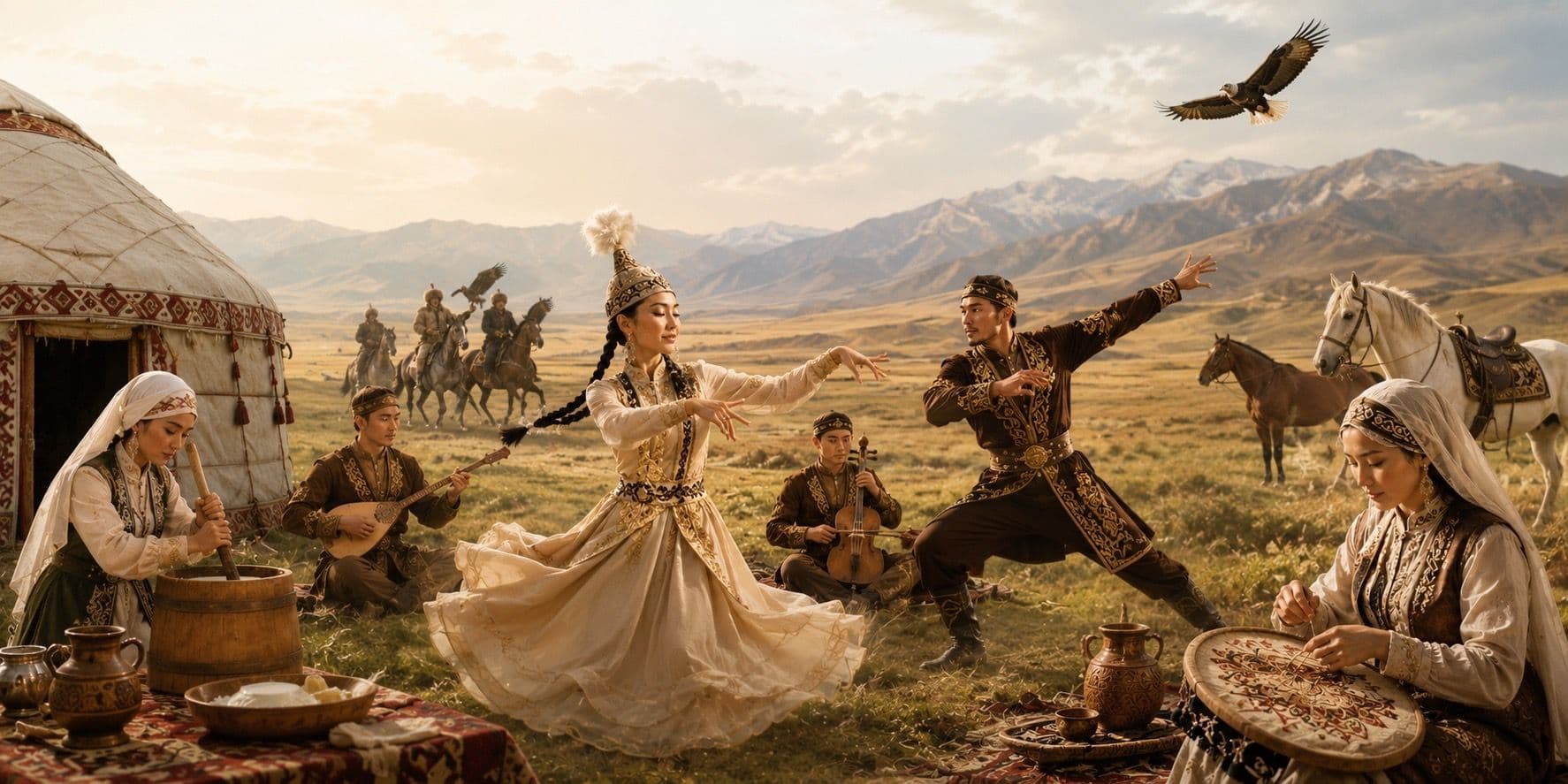
Steppe Kazakhs drew the plots for their dances from everyday life. The movements reflected horseback riding, hunting, preparing kumis, handicrafts, relationships between young people, and animal behavior. This gave rise to imitation dances. In the dance "Orteke," the movements of a mountain goat were depicted, in "Mergen" — the image of a hunter, and in dances dedicated to the horse — its graceful gait and swift run. Women's movements often focused on soft hand gestures, smooth turns of the wrists and body. These gestures resembled embroidery, adjusting a headpiece or jewelry, as well as preparing treats. Men's dances were more dynamic. In them sharp turns, wide steps, jumps, and movements conveying the rider's strength, agility, and freedom were used. However, not all dances have survived in their original form. A significant portion of the performances known today were later restored, reinterpreted, and adapted by professional choreographers. One of the key figures in the history of dance art in Kazakhstan was Shara Zhienkulova — the first professional Kazakh dancer and one of the founders of national choreography. She turned ordinary everyday movements into expressive stage gestures, understandable to the audience even without words. This is how the stage language was formed a national dance, many elements of which are still used today by dance groups at weddings and other festive events. It helps highlight important moments of the celebration, convey national color, and create a harmonious program. You can order a Kazakh national dance for a wedding, қыз ұзату, тұсаукесер, anniversary, corporate event, or official concert on our website. Here you will find professional dance groups, national performances, and various performance formats — from small numbers to large-scale stage compositions. When choosing, you can take into account the number of performers, sizes

Answered by: Ruslan Kenzikeev, Ph.D., Head of the Pedagogy Department at the Faculty of Choreography of the Kazakh National Academy of Choreography, member of the Union of Choreographers of the Republic of Kazakhstan, judge of the Association of Sports Dance Federations of Kazakhstan, leader of the dance group Skydance, founder of the Dance Hub project. Answers to questions:1. How did the idea of creating your dance group come about, and what makes it different from others?The idea for the project originated from a desire: a person who wants to bake bread opens a bakery, a person born to sew opens a studio, and I found my true passion in dance. There are many things I cannot describe with words that I convey through body movements in the choreography I once performed and now stage with particular interest. I wanted to dance, but to dance by my own rules. What does that mean? If a performance, Only well-thought-out, if costumes, then only the best, if the team, then exclusively professional! The project “Skydance” was born on these principles, and now, 13 years later, it’s worth noting that while “Skydance” wasn’t the first project in my career, it has earned its place as a classic in the history of choreography in the capital. 2. What service do newlyweds (and possibly their parents or friends) ask for most often?When you’ve been in the market for over 10 years, people come to you not just for your core service, be it a dance or a performance. Sometimes they come for advice, a recommendation, or just an opinion. And it’s not always about choreography—after all, we’re veterans in the market, we’ve seen it before the pandemic and after, so our clients often ask for our take on the competence of a host or an organizer.Отвечает: Руслан Кензикеев

There are things that aren't announced over a microphone but are felt by everyone. Atmosphere is one of them. It’s what turns an event from just a list of program points into a vivid memory. And dance plays a key role in this. It’s not just "for show" – it works with emotion, with the way the audience breathes. Sometimes just a couple of precise moves are enough to make the hall suddenly go still – not out of politeness, but out of genuine engagement. Dance knows how to capture attention gently but firmly. It gives the event rhythm, fluidity, a clear pause between words. It’s not just decoration, it’s even the evening’s breath. Especially when it comes to a Kazakh toe, where not just the food, but also the aesthetics matter. That’s why many aim to hire the beautiful "Shashu" dance for a wedding, to decorate the start of the celebration with a special moment. Every event requires its own mood. At a gala dinner or forum, a waltz or classical choreography is fitting. to emphasize status and taste. A Kazakh wedding or anniversary often sounds a little different: here, lyricism, lightness, and sometimes folk motifs come into play. More and more, newlyweds want to prepare a spectacular bride’s entrance with national dancers or style the matchmaker’s entrance in a national theme. These moments become the emotional climax of the evening and are remembered perfectly. Corporate events love drive, shows, something rhythmic: salsa, samba, fusion. And a themed evening is always a space for creativity: you can choose ethnic, retro, or even stage experiments. The main thing is not just to ‘insert a number,’ but to make it work for the theme. So that the dance doesn’t distract but complements, enhances, and harmoniously integrates into the fabric and structure of the evening. If you want your event to be more than just ‘decorated’ and truly experienced – a dance number can become the very moment that brings everything together. all together. On our website, you’ll find professional groups from Astana that can really make your evening come alive – whether it’s a Kazakh toy, a wedding with national dance elements, or a show with an ethnic twist.Есть вещи, которые не озвучивают с микрофоном, но которые ощущаются всеми. Атмосфера – одна из них. Именно она делает событие не набором пунктов в программе, а ярким воспоминанием. И танец в этом вопросе – ключевой элемент. Он не просто «для красоты» - он работает с эмоцией, с тем, как дышит зал.