Blog
Here you can discover the latest news, trends, and inspiring stories from the world of dance, read interviews with artists, and explore analytical reviews and professional tips.
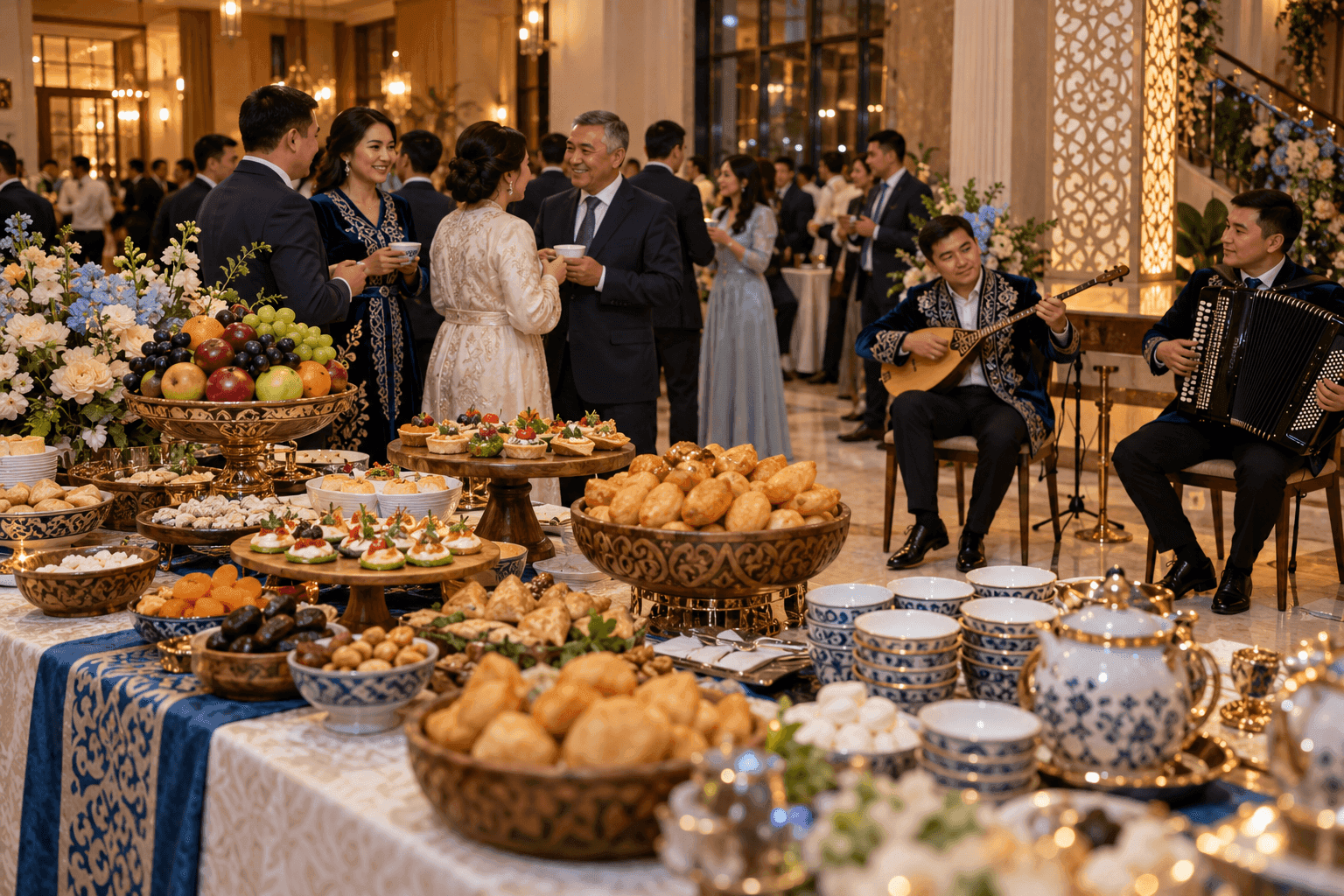
In the first part of our organiser's advice, we explained why a wedding welcome buffet deserves careful attention. Its appearance and presentation shape the first impression of the evening. Now it is time to consider the final touch: the tradition known as Keter Ayaq or Zhol Ayaq. This small ritual takes place at the end of the celebration. Sometimes it uses the same table that held the welcome buffet earlier in the evening. In an alcohol-free celebration, the tradition can be reinterpreted while preserving its most important purpose: seeing guests off with warmth, care and hospitality. The bride has thrown her bouquet, the band has taken the stage, and the second dance interval reflects the newlyweds' own musical taste. The first interval may have featured familiar favourites for the parents' friends and older guests, while the later programme becomes younger and more energetic.
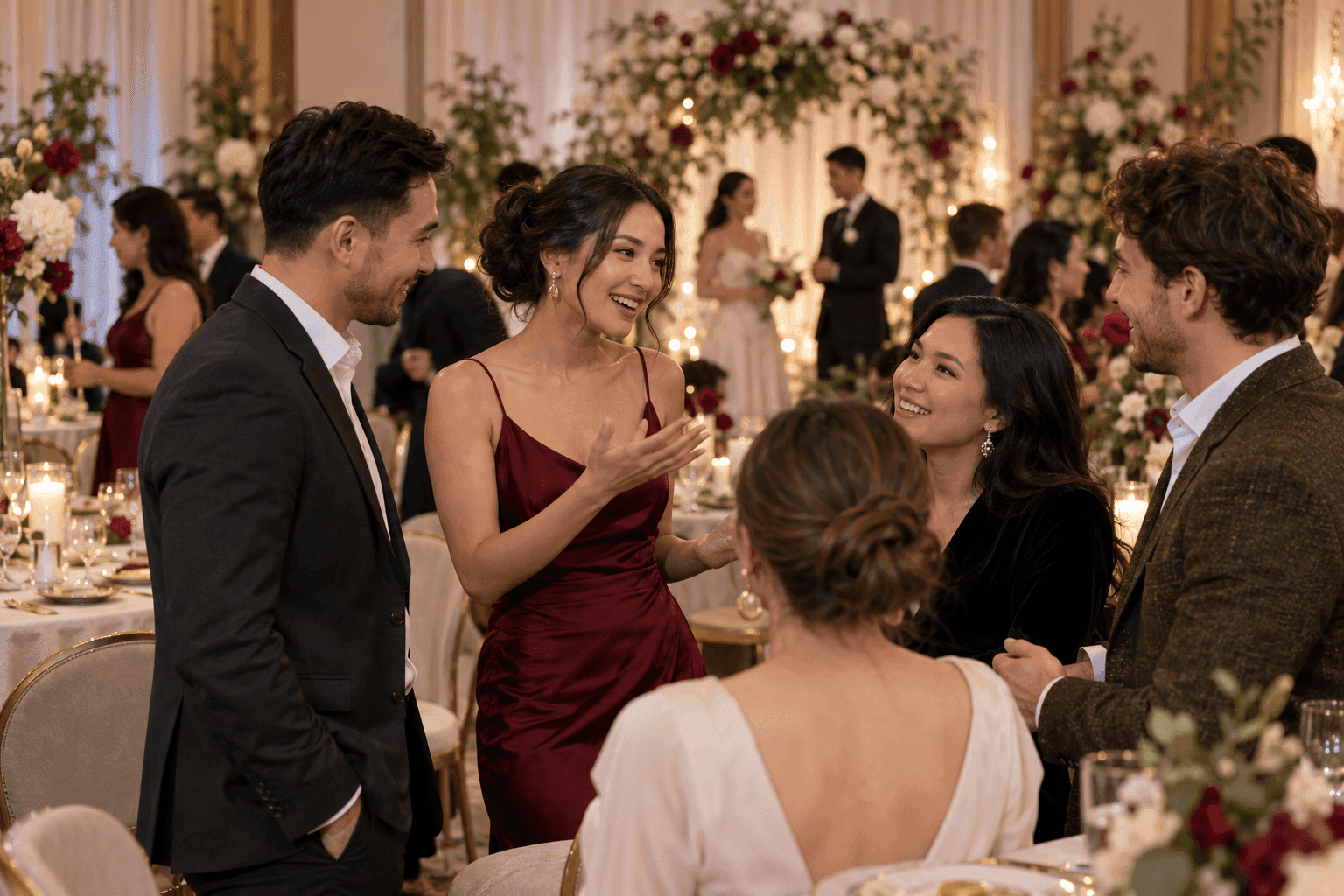
Imagine being invited to a wedding and asked to buy a ticket for 20,000-25,000 tenge. The price includes your seat, the menu, drinks, a host and live entertainment. There is just one surprising detail: you know neither the people at your table nor the names of the newlyweds. The bride and groom may not have met before the evening either. This is the idea behind “NOT a Wedding”, a themed party already appearing in selected cities across Europe and the CIS. From the outside, it looks like a real celebration, complete with a welcome buffet, decorations, dinner, toasts and dancing. Its purpose, however, is not marriage. It is designed for conversation, new connections and an unusual cultural experience. Modern city life offers too few natural and comfortable ways for adults to meet. Social media helps people stay connected, but it cannot always replace a face-to-face conversation. “NOT a Wedding” provides a familiar structure in which strangers can introduce themselves, exchange experiences and spend an evening together without the awkwardness of formal networking.

The wedding podcast is quickly finding its place in contemporary celebration programmes. The format began gaining attention in Kazakhstan at the end of summer, while the quieter autumn season gave organisers time to refine the idea for the year ahead. The DanceHub.kz team has already tested it twice and is ready to explain how it works. The podcast corner works best near the entrance to the banquet hall, close to the photo zone and welcome buffet. Recording inside the hall is more difficult: equipment is being checked, lighting and sound are being adjusted, and the service team is completing its final preparations. It is simply too noisy for a relaxed conversation. A small table, three microphones and a neat backdrop are enough to create the studio. Guests arrive, take commemorative photographs, enjoy the buffet and are then invited to record a short story about the newlyweds.
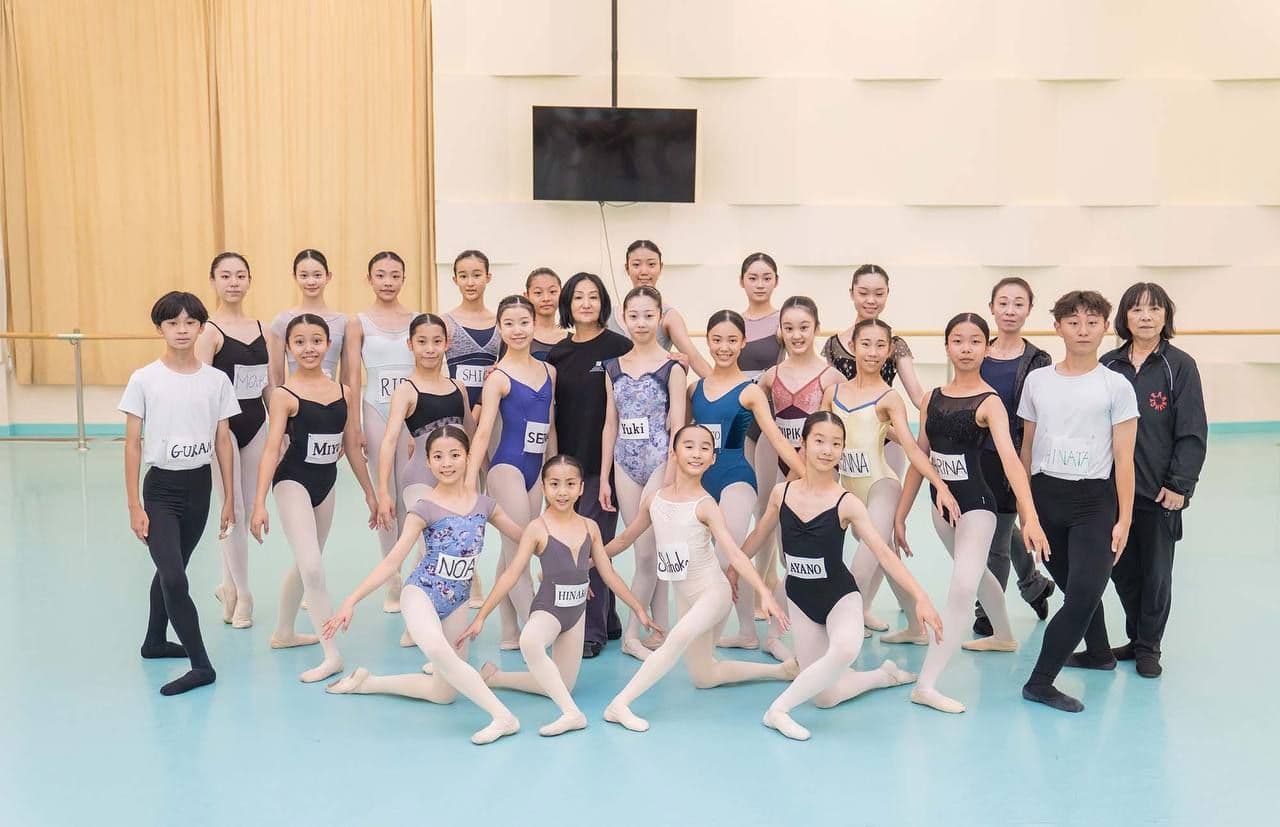
The Kazakh National Academy of Choreography has concluded an intensive programme for a delegation from Tokyo's Yoshiko Takagi Ballet School. Twenty-two students and four teachers travelled to Astana to explore Kazakhstan's approach to choreographic education, work with the Academy's leading teachers and exchange professional experience. The Japanese guests followed a focused educational programme. Young dancers took part in masterclasses in classical and folk-stage dance and worked on classical variations drawn from the world's ballet repertoire. Each class offered more than technical practice. It also allowed the students to view familiar elements through a different teaching tradition. For young artists, this kind of exchange broadens their professional outlook and encourages closer attention to every detail of stagecraft.

Wedding trends are changing rapidly, but remaining fundamentally Kazakh, our traditional wedding still strives to keep up with the times and social trends. Not a single ritual has been canceled, and moreover, each has been beautifully improved in its own way. Even the noisy and fun women's ceremonies, nicknamed “kalta show” by people, are now held with even more enthusiasm than before, involving more participants. The process of more and more teens getting into Toyas. Ever since the time when Toybastars were brought into the hall no less ceremoniously than meat, the filling and presentation of the Toybastar have undergone so-called 'upgrading.' First of all, bringing gifts to the evening guests is now preferred in a European way: when guests take their seats, they already find small compliments from the organizers under their plates. Which in itself is already eliminates the need to make separate deliveries of gifts. In addition, individual gift bags for women are distributed in special craft bags, and the contents of such bags often include women's accessories: scarves, cosmetic sets, items needed for home use, or useful decorative additions to the boudoir: jewelry boxes, ring statues, candle holders.
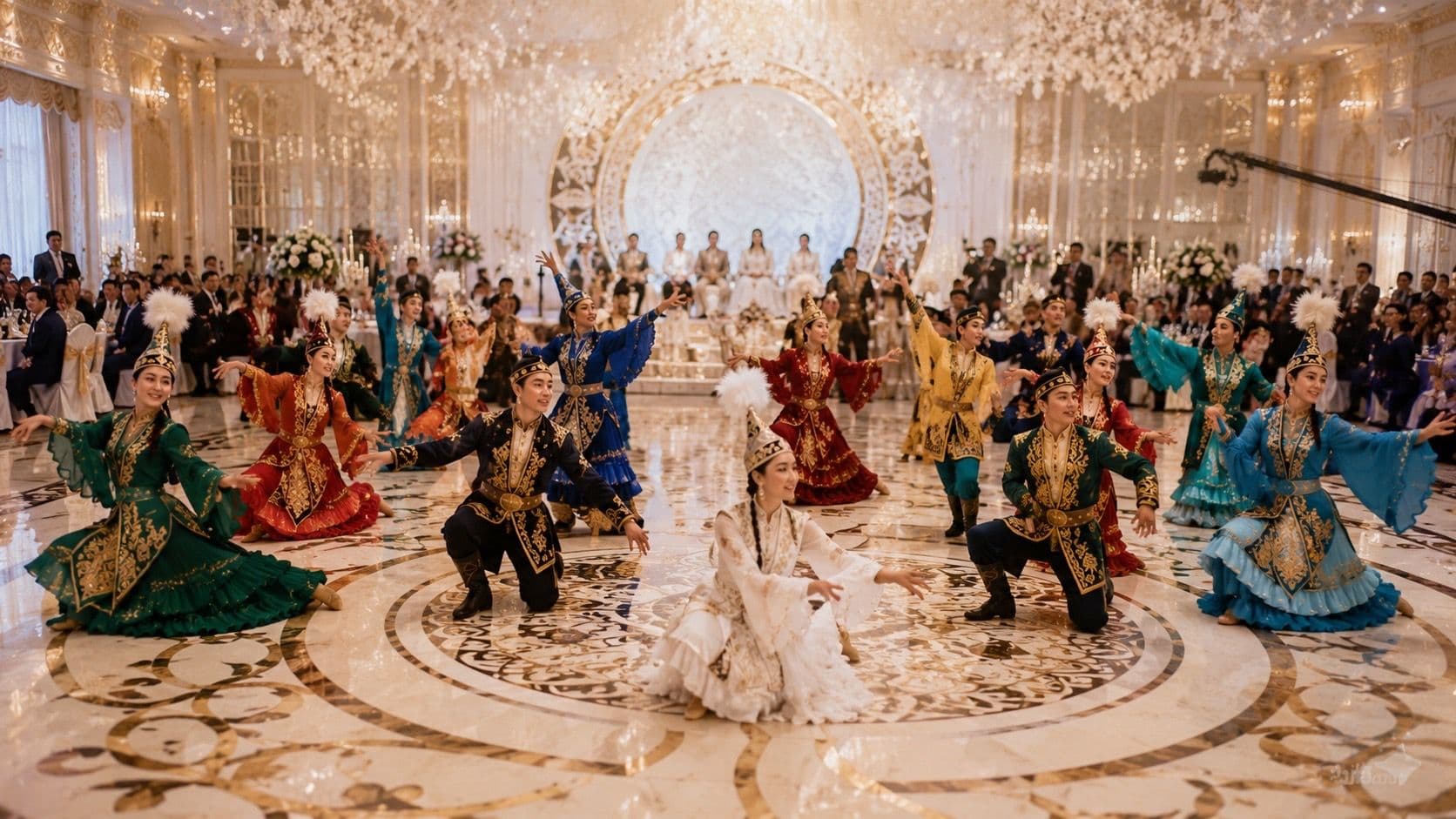
Modern Kazakh weddings have long become a complex cultural and organizational phenomenon. Organizers, hosts, musicians, designers, photographers, videographers, and dance groups all take part in preparing the celebration. In this system, the national dance serves several important functions at once. It decorates the event, helps structure the program, accompanies traditional rituals, and highlights the family's cultural identity. However, behind every vibrant stage performance lies a centuries-old history. Kazakh dance has evolved from free folk improvisation to professional theatrical production, and then became an integral part of the modern toy industry. The venues, stage costumes, and audience expectations have changed, but its main feature has remained the same — the ability to tell a story without a single word. The development of the toy industry has made Kazakh national dance truly a mass art form. Thousands of children take classes in dance studios, professional groups regularly perform at events, and audiences are increasingly seeing national choreography at family celebrations. Today, you can book a performance by a professional dance

The way cultural identity shapes and inspires modernity today is undeniable. By 2025, beauty and aesthetics have become a priority for many movements, and in the context of cultural enlightenment, this is an integral part of a bigger mosaic. Our nation is now at an important stage Self-discipline, the views of young people reach many important figures, and this isn’t about politics, far from it. Innovations in dance show up in performances that combine nostalgia and modernity. Many teachers, professors, and mentors note a trend unseen since the times of the Kazakh SSR. The potential and depth of Kazakh philosophy have the full freedom of the steppe for self-expression. This generation understands it and promotes the idea among the people. the revival of culture and spiritual self-determination. Today, meanings are conveyed through all folklore: dance, music, applied and visual arts. We are the children of the steppe, and today the honor of restoring the nation's memory is in our hands through the native notes of the kobyz, reading literature, and studying Kazakh dance.

It's worth starting with the main question: where did the concept of 'bride syndrome' even come from? Although the term sounds like a psychological diagnosis, it doesn't have a direct connection to professional psychology. This concept came from the wedding industry, where planners and consultants began to notice that many brides become particularly anxious and tense during the wedding preparation period. emotional or overly demanding. Gradually, the expression took hold in the media, gaining almost cult status. But does the "bride syndrome" really exist, or is it just a myth created by the industry? Let's try to figure it out. Why does the "bride syndrome" even happen? A wedding is one of the most significant events in life. And expecting yourself to be completely calm at such a moment is difficult. In The bride is being pressured all at once: • perfectionism — the desire for everything to be perfect: the dress, the planning, the guests, the menu, the decor; • social expectations — family, friends, public opinion, traditions; • financial burden — costs and fear of making the wrong choice; • chronic stress from preparation — endless meetings, fittings, clarifications; • fear of change — after all, a wedding is a symbol of the start of a new life. Hence

On July 1, 2025, the founder of the website, Ruslan Vladimirovich Kenzikeev, went on vacation, and that day became the starting point for creating this platform. He had been nurturing the idea of creating something new for almost 12 years, and since his last project was the Sky Dance collective, he didn’t plan on moving away from his usual dance concept. The initial idea for the website revolved around consolidation. the country's choreographic community on a single online platform. Work kicked off almost immediately, articles were being written, and the design and layout of the future portal were being developed. The first profiles and posts started appearing by the end of the month. In August, the trio of Ruslan, Yan, and Azamat decided that the website could be launched officially. That's how the idea of presenting the site at the Astana Ballet building came about. It's very exciting, but at the same time beautiful. The signing of the memorandum of understanding and cooperation with the Kazakh National Academy of Choreography was the first step in implementing the conceptual goals of DanceHub.kz. Over time, the site began covering many cultural events from the world of choreography, thereby attracting the attention of the community. Gradually, the sections published on the site also expanded:

The majestic walls of the Astana Ballet theater probably have never seen this kind of cultural leisure before. It would have been hard to imagine, even for longtime patrons, that under the vault of monumental columns right at the entrance to the cradle of world art, a club DJ would start playing. However, the story demanded it, so thrillingly and meticulously worked out by Ruslan Vladimirovich's team. Kenzikeeva. The breaking of stereotypes probably highlighted not only D.j Young, who, by the way, is the website developer, but also the overall concept of the event. First of all, the presentation went as a business-like and structured event; those used to the lofty adjectives of hosts, a lot of humor, and showiness—the hardworking folks of the event industry—were a bit taken aback. The restraint of the interior and the uniqueness of the venue as if hinting at something vaguely familiar. As the host of the evening, Ruslan Vladimirovich was warm, excited, and inwardly celebratory. In the eyes of each member of the dance hub.kz team, there was something like anticipation and excitement. As is typical during evening traffic jams, the gathering took a long time, about an hour and a half. The number of guests could be determined by those who arrived on time.
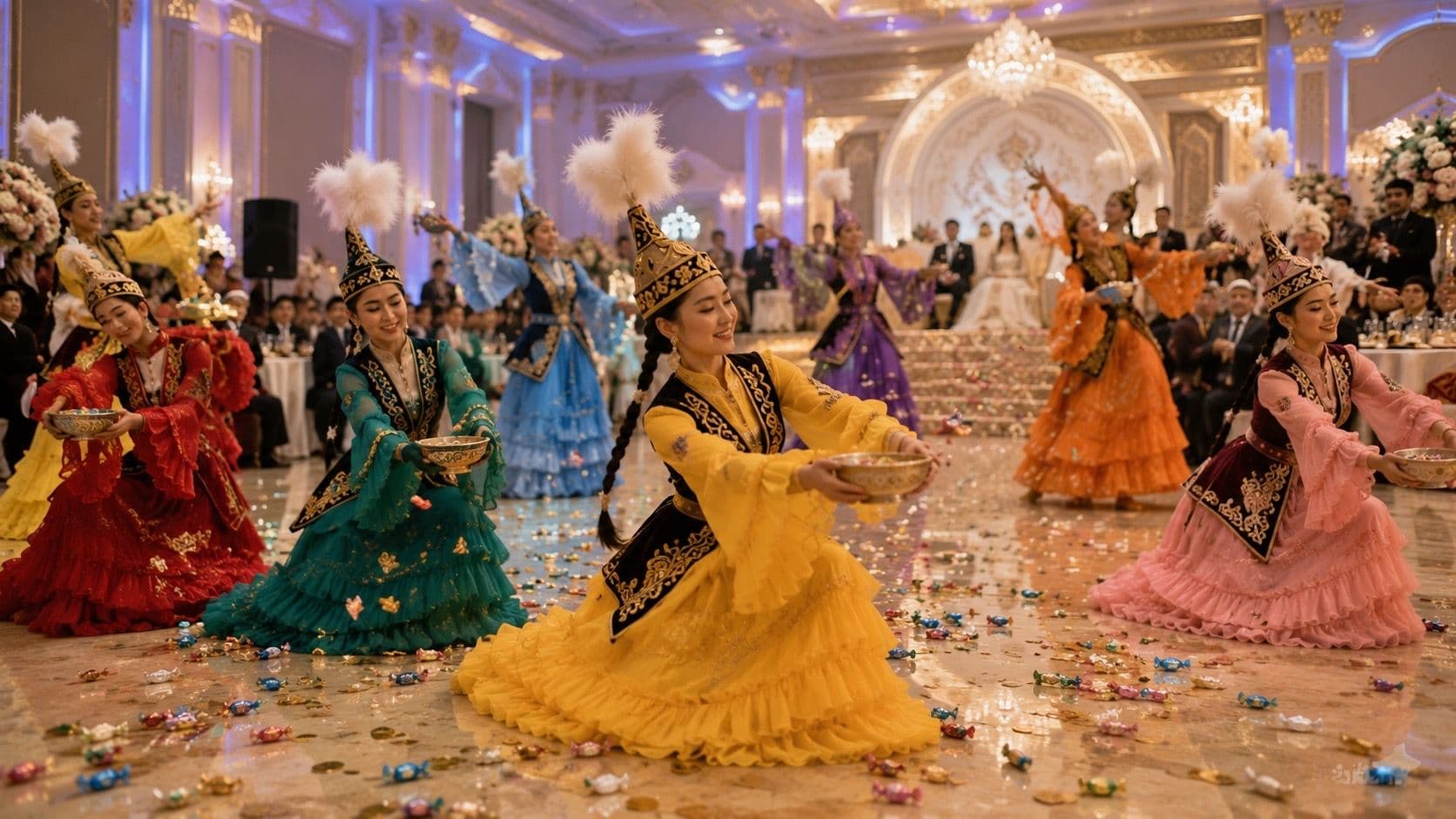
As Kazakh dance art developed, the national dance gradually turned into a full-fledged stage genre. Folk motifs combined with professional choreography and theatrical expressiveness. Instead of a single improvising performer, entire dance ensembles began performing for audiences. Synchronized movements, complex formations, and vibrant national costumes and well-thought-out choreography for each performance. This format has proven especially popular in the modern toy industry. Short, impressive productions easily fit into the schedule of a celebration, accompany important national rituals, and help create a special atmosphere. Today, dance groups greet guests, kick off wedding celebrations, and accompany the newlyweds’ entrance, They take part in the қыз ұзату ceremony and prepare special performances for the тұсаукесер. One of the most popular performances is still the dance 'Shashu.' It is based on the ancient Kazakh tradition of showering the celebrants with sweets and coins, wishing them happiness, wellbeing, and prosperity. At modern events, this dance is most often used to welcome guests or the newlyweds. The performers in

Anvara Aripovna's path is not just a career, but a separate chapter in the choreographic culture of Kazakhstan. In our new podcast, she talks about what drove her choices, what her first discoveries were, and how a legacy is created that generations will live by.<div class="video-container"> <iframe src="https://www.youtube.com/embed/EuzLdNUHCMo" frameborder="0" allowfullscreen> </iframe></div>Путь Анвары Ариповны — это не просто карьера, а отдельная глава в хореографической культуре Казахстана. В нашем новом подкасте она рассказывает, что стояло за её выбором, какими были первые открытия и как создаётся наследие, которым будут жить поколения. <div class="video-container">