Blog
Here you can discover the latest news, trends, and inspiring stories from the world of dance, read interviews with artists, and explore analytical reviews and professional tips.
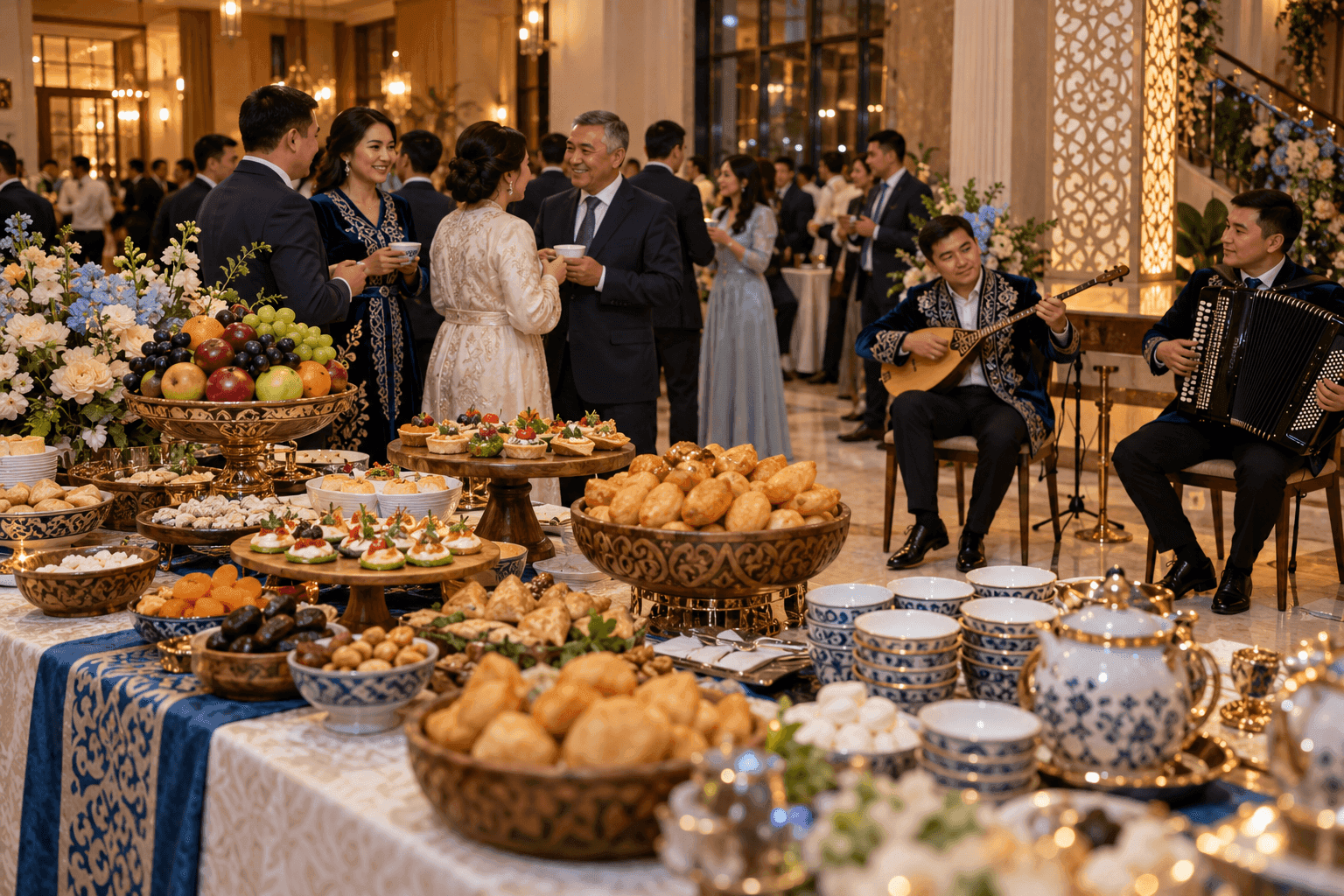
In the first part of our organiser's advice, we explained why a wedding welcome buffet deserves careful attention. Its appearance and presentation shape the first impression of the evening. Now it is time to consider the final touch: the tradition known as Keter Ayaq or Zhol Ayaq. This small ritual takes place at the end of the celebration. Sometimes it uses the same table that held the welcome buffet earlier in the evening. In an alcohol-free celebration, the tradition can be reinterpreted while preserving its most important purpose: seeing guests off with warmth, care and hospitality. The bride has thrown her bouquet, the band has taken the stage, and the second dance interval reflects the newlyweds' own musical taste. The first interval may have featured familiar favourites for the parents' friends and older guests, while the later programme becomes younger and more energetic.
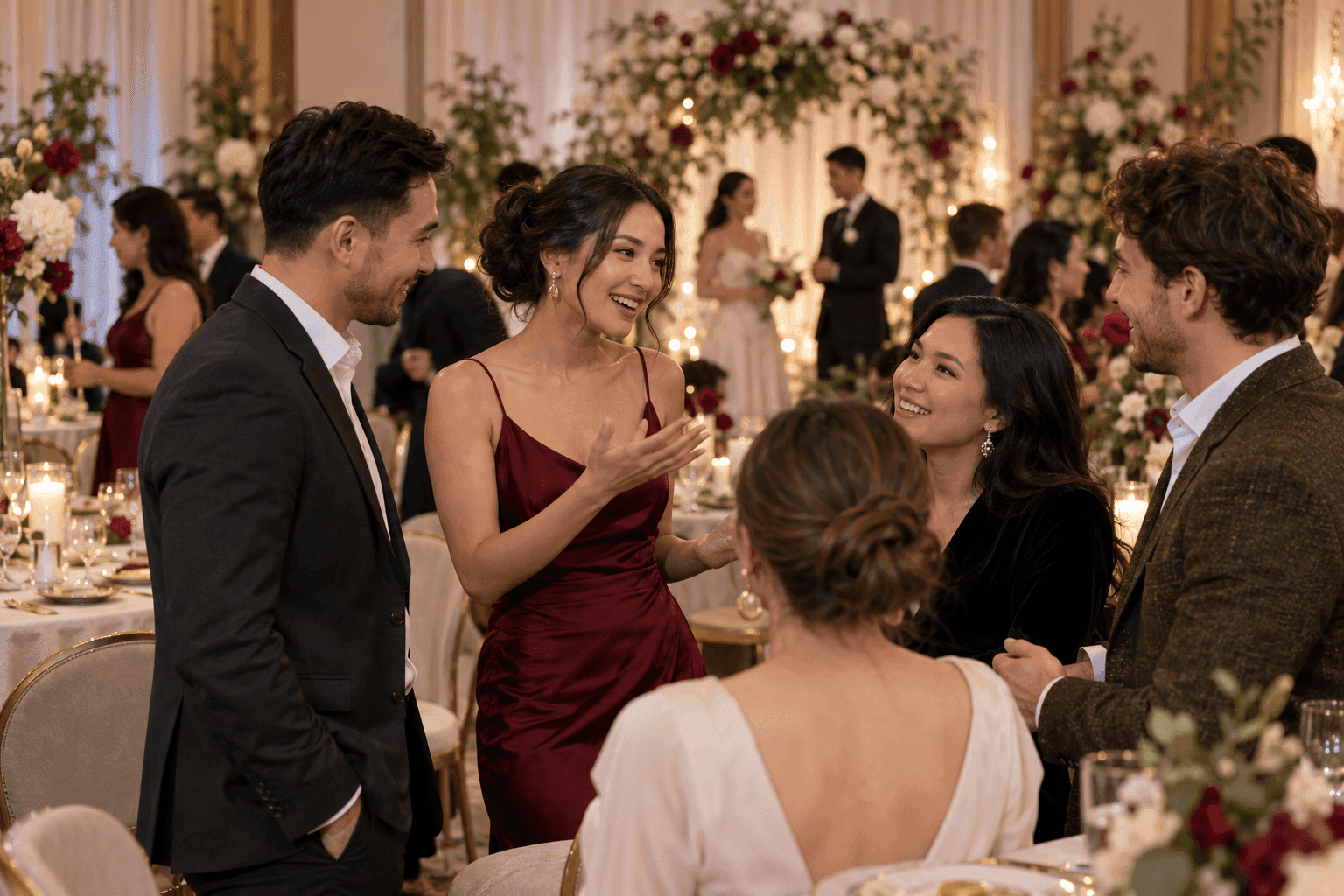
Imagine being invited to a wedding and asked to buy a ticket for 20,000-25,000 tenge. The price includes your seat, the menu, drinks, a host and live entertainment. There is just one surprising detail: you know neither the people at your table nor the names of the newlyweds. The bride and groom may not have met before the evening either. This is the idea behind “NOT a Wedding”, a themed party already appearing in selected cities across Europe and the CIS. From the outside, it looks like a real celebration, complete with a welcome buffet, decorations, dinner, toasts and dancing. Its purpose, however, is not marriage. It is designed for conversation, new connections and an unusual cultural experience. Modern city life offers too few natural and comfortable ways for adults to meet. Social media helps people stay connected, but it cannot always replace a face-to-face conversation. “NOT a Wedding” provides a familiar structure in which strangers can introduce themselves, exchange experiences and spend an evening together without the awkwardness of formal networking.
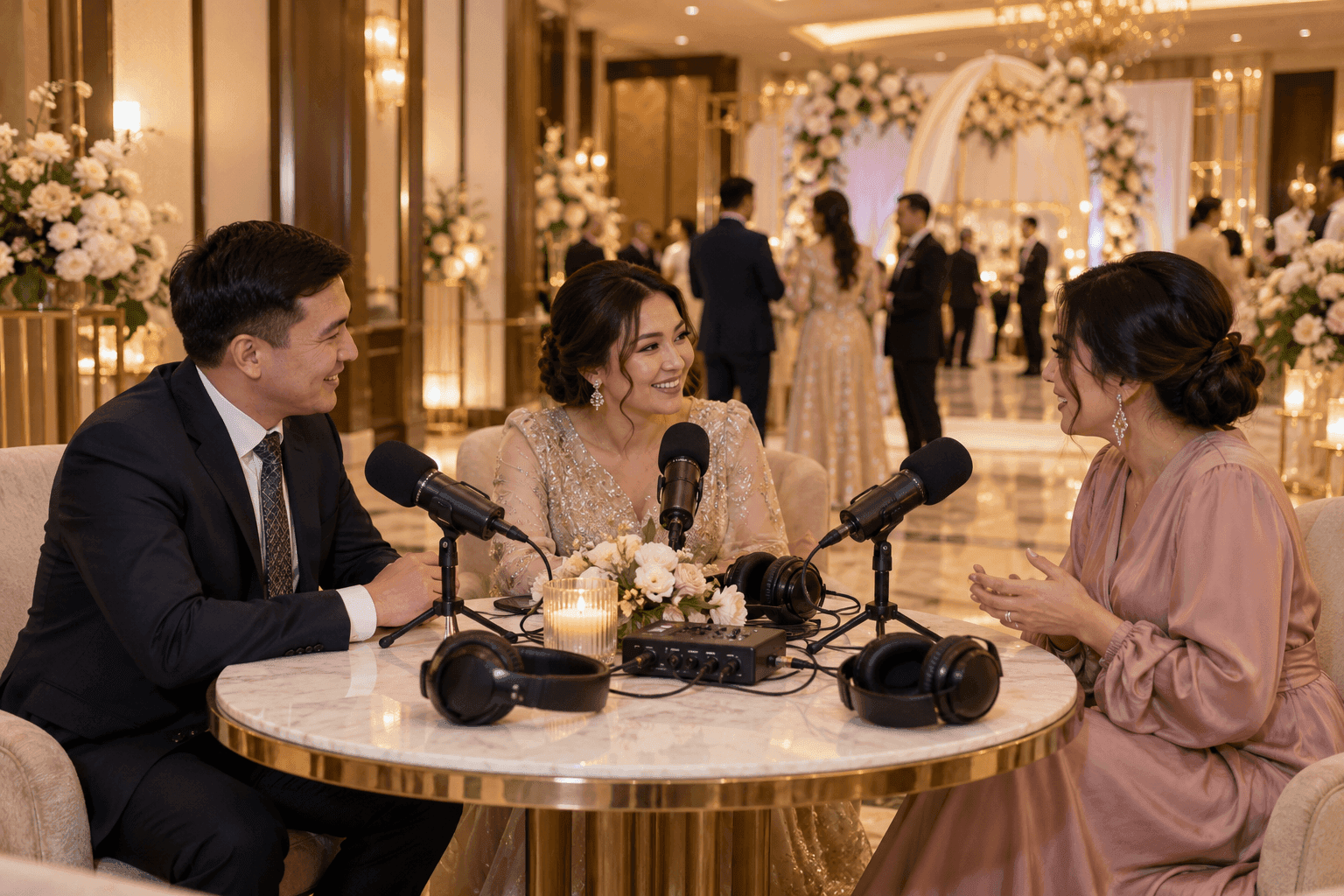
The wedding podcast is quickly finding its place in contemporary celebration programmes. The format began gaining attention in Kazakhstan at the end of summer, while the quieter autumn season gave organisers time to refine the idea for the year ahead. The DanceHub.kz team has already tested it twice and is ready to explain how it works. The podcast corner works best near the entrance to the banquet hall, close to the photo zone and welcome buffet. Recording inside the hall is more difficult: equipment is being checked, lighting and sound are being adjusted, and the service team is completing its final preparations. It is simply too noisy for a relaxed conversation. A small table, three microphones and a neat backdrop are enough to create the studio. Guests arrive, take commemorative photographs, enjoy the buffet and are then invited to record a short story about the newlyweds.
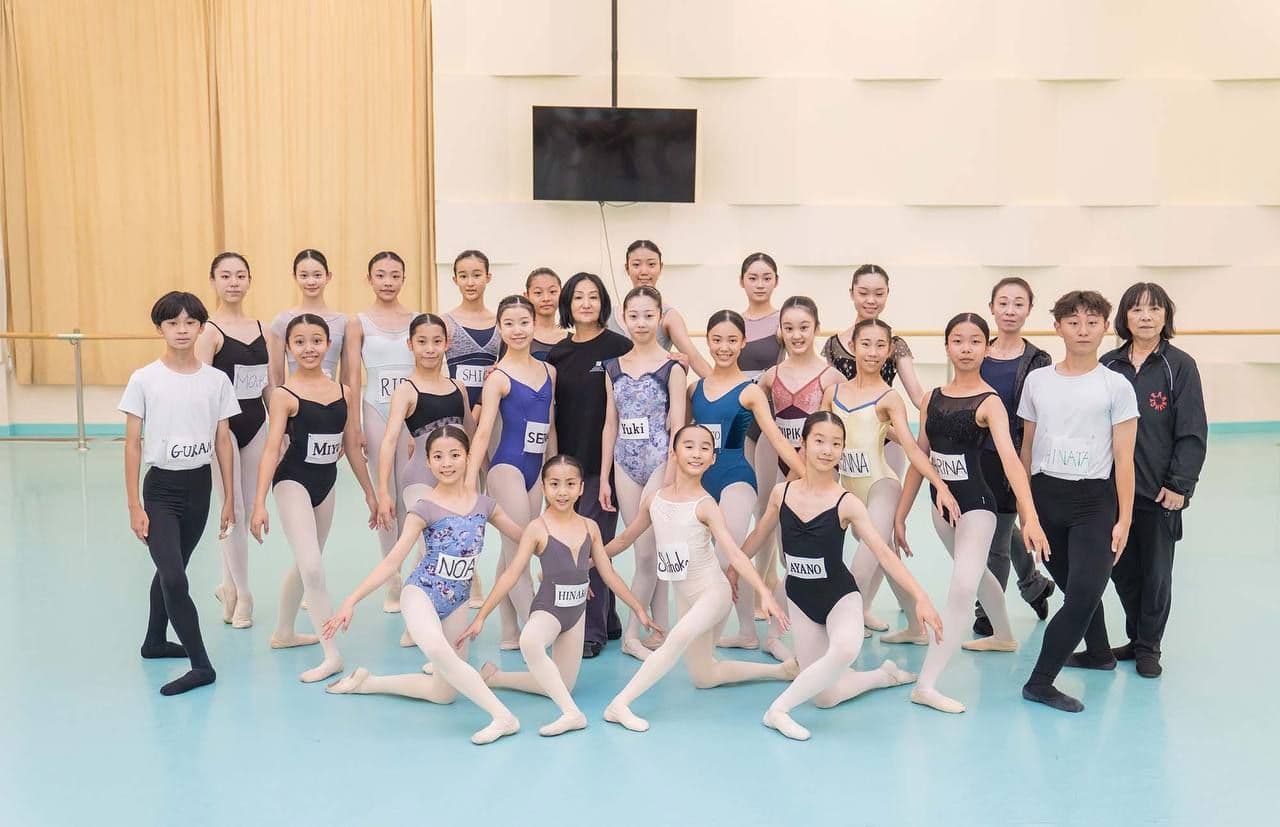
The Kazakh National Academy of Choreography has concluded an intensive programme for a delegation from Tokyo's Yoshiko Takagi Ballet School. Twenty-two students and four teachers travelled to Astana to explore Kazakhstan's approach to choreographic education, work with the Academy's leading teachers and exchange professional experience. The Japanese guests followed a focused educational programme. Young dancers took part in masterclasses in classical and folk-stage dance and worked on classical variations drawn from the world's ballet repertoire. Each class offered more than technical practice. It also allowed the students to view familiar elements through a different teaching tradition. For young artists, this kind of exchange broadens their professional outlook and encourages closer attention to every detail of stagecraft.

Once, trick riding was not a stage act but a matter of the steppe. It wasn’t a dance, but training. A test of reaction, agility, and spirit. Young riders proved what they were worth in practice. What can now be booked as an impressive stage number for a celebration once decided the outcome of hunts and battles. For Kazakhs, trick riding was a part of life. After all, the ability to be precise and keep rhythm at the right moment was important both in hunting and in combat. Today, this art is reimagined in stage performances: bright, rhythmic, and full of strength. These are exactly the kinds of numbers – like "Kara Zhorga," "Balbyraun," or the legendary "Adai" – that you can book on our website for a Kazakh wedding in Astana or any other celebration where you want to show respect for traditions and the strength of ancestors’ spirit. Centuries have passed, and trick riding has changed. From a skill in handling a horse, it has turned into a stage art. And now it’s one of the most spectacular. performances at any celebration and is known as the dance of the jigits. And even though there’s no horse anymore, the stance and discipline remain. You can find the best jigit dance performance on our website. This kind of dance is like a short film about strength, without words or lines. Just movement, energy that the audience becomes a part of. At any event, especially at a Kazakh wedding, this dance sets a completely different mood. When the jigits take the stage, the audience feels something that’s missing in other national dances: masculine strength, restrained yet confident. Nowadays, you can find such a troupe in Astana – the main thing is to choose those who don’t just dance but convey the spirit of a jigit. Then the performance becomes not just a show, but a tribute to ancestors, to the strength and perseverance that shaped the Kazakh character. It’s incredibly mesmerizing. Such an impact is rarely achieved even by a polished show. You don’t need to explain this performance. He simply becomes a moment after which the celebration sounds different. On our website, you can book a performance of jig dancers in Astana with professional artists whose choreography carries the spirit of the steppes. It's not just a show – it's a stage with character, worthy of the best celebrations. Especially if you're planning a Kazakh wedding, where the traditions they bring are important.Когда-то джигитовка была делом не сцены, а степи. Это был не танец, а тренировка. Проверка реакции, ловкости, духа. Молодые всадники на деле показывали, чего они стоят. То, что сейчас можно заказать как эффектный сценический номер на праздник, когда-то решало исход охоты и сражения.

Having become an important tradition for the event industry, this celebration serves the principles of creative unity, team development, and aims to increase professionalism in the field of organizational services within the sphere of interaction of creative industries.This year, the celebration will take place again and bring together numerous event companies, artists, musicians, dancers, and other market participants. A teleconference with colleagues from the city of Pavlodar is planned, and connections from other regions are possible.Event Organizer Day 2026 will be held on May 20 in Astana. The organizational team of the project consists of the initiators of last year’s celebration.And a bit of backstory.The holiday was established by several event companies in the capital and, of course, is not officially in the state calendar. It is. Representatives of the event industry celebrate their professional holiday symbolically — on the eve of the Culture Workers' Day of the Republic of Kazakhstan, which is celebrated every year on May 22. Event Organizers' Day is held on May 20.This is not a marketing move to create a news hook, but a practical opportunity to organize a meeting of artists, organizers, directors, and other industry representatives to exchange opinions and experiences before the start of the annual wedding season. Event Organizers' Day is also a dialogue platform where new acquaintances, partnership relations, and creative collaborations are born.The pilot project of Event Organizers' Day took place on May 20, 2025, in Astana. Within the framework of the script, a record was set by the holding of the largest 'betashar' ceremony in Central Asia. The record was documented by the KinэS Book of Records commission. The record holder is the event company 'The Royal Event'. Many companies specializing in children's events, decor companies, the confectionery 'Nekrasovskie Recipes', and other industry representatives took part in the celebration. The exhibition space was beautifully set up on the green lawn of the Sultanat Saray Reception Palace.Ставший важной традицией для ивент-индустрии, этот праздник служит принципам творческого единства, командного развития и ставит своей задачей повышение профессионализма в сфере организационных услуг в орбите взаимодействия креативных индустрий.

In September of this year, Astana will be swept away by a musical wave of nostalgic and new hits by Kairat Baekenov! As a composer and performer, Kairat has become a stimulus and creative springboard for a large number of talented performers in the capital. At the dawn of the 2000s, the music scene was shaken by the incredibly successful album of the trio 'Baiterek' called 'Sen'; lyrics, music, arrangements, and performance style—all these familiar components of his work sounded new, fresh, and daring, all thanks to Kairat's innovative vision. The album quickly topped both local and national charts of radio stations and music channels. People started talking about Kairat Baekenov as one of the most sought-after composers of today. Afterward, a whole lineup of new names emerged on the domestic scene: Dos, Medet Shaikelov, the Aspan Duo, the Dabyl Duo, and many others. The hits were released hot off the press straight to the airwaves and They conquered all new categories of listeners from 25 to 60; people listened to Kairat's creations with delight. Musical collaborations with Marzhan Arapbayeva, Kurmash Mahanov, and many other stars of the country draw close attention from national producers and directors to the capital's industry. Kairat's success is rightly considered the starting point of the professional rise of the cultural level of the new capital. At the same time, the music group "Format" was formed, with Kairat Baekenov as the frontman, regularly performing at various prestigious events. There is a true story behind the band's name: back then, numerous artistic boards of radio stations and music channels would often justify their refusal to play a song on air with the phrase "it's not the format." Whether as a joke or with a hidden message, Kairat named the group "Format" to leave no room for argument. musical editor. He gave his first solo concert, “Kairat Baekenov — that's me,” more than ten years ago, and by musical standards, that was long before the big hit “Mahabbat.” And then, as you remember, there was a whole string of successful hits and that memorable performance at Jennifer Lopez’s concert in Astana. Kairat has spent his entire creative career in Astana, a city that is completely in love with his work. And in return, Kairat is leaving an unforgettable mark in the history of Astana, and his contribution to the country’s culture is truly hard to overestimate. Many important milestones in his development as an artist will be highlighted in his anniversary concert, dedicated to the 20th anniversary of the group.

Every dance has its own time and place. For the waltz, the time is always in the evening. It also has its place – wherever music is played respectfully. Where the light doesn’t shout, but highlights, and there’s no rush. If you want to invite a dance performance that creates an atmosphere of elegance, look towards the waltz. It’s not just decoration, but an accent that sets the tone for the whole celebration. This dance wasn’t born in a school or a studio. It came from another era – one when people did not rush through life. When touching a lady’s hand meant more than a hundred words. The waltz appeared in Europe in the 18th century – first as a challenge, then as recognition. It was banned, then adored. But the main thing is – it was remembered. Today you can book a waltz performance that carries all this history – from the first steps at balls to modern scenes at a Kazakh toy or a high-status reception. At first, it was a dance for fairy-tale halls with stucco, mirrors, and a live orchestra. Later, he stepped onto stages, into films, and concert numbers. But in him, there still remained the stage with a bow and dignity. A waltz is not a flash, but a steady light. To find just such a waltz – soulful, with inner depth – it's worth choosing experienced groups. On our website, check out examples of their work, compare how they perform, and make sure to clarify if the number can be adapted for your event. Today, the waltz is returning to events where people want not just 'bright,' but stylish. It appears at gala dinners, anniversaries, diplomatic receptions, forums, and even at modern Kazakh weddings, where not just energy, but a sense of refinement matters. By inviting artists to your celebration in Astana, you set that exact tone that no script can provide – stylish, composed, elegant. The waltz was never just entertainment. It has always stood Standing apart, as a sign of good taste, respect for form, for the moment. It's a dance that sets the tone both outwardly and inwardly. Its appearance in the program doesn't shout about status, but it also doesn't let anyone doubt it. Ordering a waltz for a wedding means emphasizing the seriousness of the event and its delicate mood. If you want to highlight the event's status and give the evening a special vibe, the waltz will speak more accurately than words. This is especially relevant if you're preparing for a Kazakh wedding, a business forum, an anniversary, or a high-level presentation. There are many groups in Astana that dance the waltz. But performing this dance beautifully and mesmerizingly – not so many. On our website, you can find and book a waltz performance with professional artists for those events where what matters is not just the “picture,” but real feeling, style, and atmosphere.У каждого танца есть своё время и своё место. У вальса время всегда вечернее. Есть у него и своё место – там, где звучит музыка, сказанная с уважением. Где свет не кричит, а подчеркивает, и нет суеты. Если вы хотите пригласить танцевальный номер, который создаёт атмосферу благородства, посмотрите в сторону вальса. Это не просто украшение, а акцент, который задаёт тон всему празднику.

Bakhtiyar Aryngazin is a well-known host in the capital and in demand across the country. He is a talented, proactive, multilingual, and resourceful professional. Hundreds of his clients remember him as a strong improviser: his witty yet always appropriate and funny lines create a trusting atmosphere from the very first minutes of the event. Bakhtiyar uses a complementary style of communication with guests and relies on professional improvisation techniques, which he has long practiced at a mentor level. His expert influence was the starting point for the creation of a unique project in the capital — the creative community 'TaLAB.' Founded in October 2024, the community quickly attracted the attention of many young hosts in the city. In this creative profession, consolidation plays an important role: being in a like-minded environment, hosts develop professional thinking faster. creative vision and conversational skills. From its very first days, “TaLAB” became a noticeable phenomenon thanks to the participation of such well-known industry representatives as Ramazan Jalbirov, Didar Omirzhan, Nurlan Kunafin, Olzhas Pshenbayev, ZHEKA ZHEZ, Nikita Lavrov, and others. Under Bakhtiyar Aryngazin’s leadership, the community regularly hosts workshops and masterclasses. Participants hone their skills in projects like “Prozharka,” “Improv Kvartirnik,” “Musical Lotto,” and a new creative project is also being prepared — “Cover Show.” It’s worth noting that TaLAB’s projects are in high demand among the city’s venues. Bakhtiyar collaborates with popular restaurants and karaoke spots in Astana, and the community itself has become a noticeable driver of the capital’s cultural life. In addition, the team actively works on original projects: for them, it’s equally easy to create a commercial script or develop the concept for an entire series. Large The number of creative specialists makes «TaLAB» a true factory of original content. The team provides event planning services along with their marketing support. The project involves more than 16 people, each of whom has their own active audience on social media. «TaLAB» also includes a team of experienced SMM specialists, and the community’s videos are already getting millions of views. The creative community «TaLAB» is much more than just a group of hosts. It’s a team of scriptwriters, comedians, marketers, promoters, designers, and videographers. The project is an effective tool for addressing tasks in the field of image promotion, especially in the HoReCa industry. This is the first project of such scale implemented by Bakhtiyar Aryngazin. With strong management skills and significant experience, he puts maximum effort into «TaLAB» — and

As of today, Askhat Sagitov is a well-established, mature, and well-prepared event project. Perhaps no other host in the capital invests as much in knowledge, experience, and culture as he does. While many of his colleagues are still searching for their format, style, and direction, Askhat Sagitov wisely left that choice to his clients. Much like a century-old English car brand, he has maintained restraint and built his path in the industry consistently and strategically. After all, even the most complex product will find its client — if it truly has value. From the start, Askhat positioned himself knowing he would work in the premium segment — with dignity and aiming for serious image and reputation dividends. As a result, his style and direction have been shaped by his clients themselves — those who value working with someone thoughtful, curious and An erudite host. Askhat Sagitov reads a lot, is getting a second higher education in management, actively does sports, writes scripts, and regularly works at business events. Forums, conferences, closed strategic sessions, business brunches, and presentations — all of these are some of the most challenging formats for a host. Where standard phrases and rehearsed jokes are used, a host becomes out of place. The main difficulty is that at such events, the audience truly listens — attentively and critically. An unprepared wedding host simply has no place in such an environment. Despite his achievements, Askhat Sagitov has never considered himself the smartest. On the contrary, he has always aimed for personal growth and actively sought mentors. They regularly appear in his life journey, and, being selective in knowledge, he is constantly in the process of personal and Professional growth. Who, if not Askhat Sagitov, could become the official host of the "What? Where? When?" Club in Astana? He is experienced, well-read, empathetic, and organized. Connoisseurs of the capital know and respect him for his intellectual modesty and professional depth. Askhat has been playing "What? Where? When?" for many years, has trained and prepared experts, has excellent knowledge of game etiquette, and confidently handles the most challenging part of the game — hosting it. Being on the same level with the club's masters, among whom are lawyers, deputies, businessmen, and top managers, is the result of serious life experience and specialized training. This spring — meet him! The elite "What? Where? When?" club in Astana, hosted by Askhat Sagitov. Get to know the hero of the article better in a podcast dedicated to his personality and professional path.

There comes a moment when an event is in full swing, yet something is missing. Everything is perfectly calibrated—the lighting, the food, the program, even the host strikes the right tone—but the audience remains reserved, as if keeping their distance. It is precisely at such moments that you need a performance that doesn't just grab attention but electrifies the room—beautiful, rhythmic, and precise. In this regard, dance is an unrivaled tool, especially at a Kazakh *toy* (celebration), where the event must be more than a mere formality—it must be a truly memorable occasion. However, not just any dance can create a "wow" factor. It isn't about loud music or flashy costumes; it’s about the energy radiating from the stage and cutting straight through to the audience. It’s when spectators don’t just watch but literally feel the vibrations in their bodies, on their skin, and in the air—moments when they can barely stay in their seats. You can achieve this effect, for instance, by booking a *Lezginka* performance in Astana: this dynamic, masculine dance always draws thunderous applause and turns up the heat of the evening.

You surely know that there are dances where the soul speaks, not just the body. *Kamazhay* is exactly that kind of dance. It is not merely a performance; it is a heartfelt confession. Every movement is like a line of poetry written by the body. It is not just beautiful—it is deeply sensual and profound. When you book the *Kamazhay* dance for a Kazakh *toy* (celebration), you are choosing not just an act, but a moment that will linger in people's hearts. *Kamazhay* has deep roots. It all began with a song—simple, yet as poignant as love itself. In it, a young woman confided her feelings to her beloved—softly, as if whispering into his ear. Later, the song came to life through dance. Today, watching *Kamazhay* is like reading an old letter filled with tenderness and dignity.