Why order a Cossack dance at the wedding?

Once, trick riding was not a stage act but a matter of the steppe. It wasn’t a dance, but training. A test of reaction, agility, and spirit. Young riders proved what they were worth in practice. What can now be booked as an impressive stage number for a celebration once decided the outcome of hunts and battles. For Kazakhs, trick riding was a part of life. After all, the ability to be precise and keep rhythm at the right moment was important both in hunting and in combat. Today, this art is reimagined in stage performances: bright, rhythmic, and full of strength. These are exactly the kinds of numbers – like "Kara Zhorga," "Balbyraun," or the legendary "Adai" – that you can book on our website for a Kazakh wedding in Astana or any other celebration where you want to show respect for traditions and the strength of ancestors’ spirit. Centuries have passed, and trick riding has changed. From a skill in handling a horse, it has turned into a stage art. And now it’s one of the most spectacular.
performances at any celebration and is known as the dance of the jigits. And even though there’s no horse anymore, the stance and discipline remain. You can find the best jigit dance performance on our website. This kind of dance is like a short film about strength, without words or lines. Just movement, energy that the audience becomes a part of. At any event, especially at a Kazakh wedding, this dance sets a completely different mood. When the jigits take the stage, the audience feels something that’s missing in other national dances: masculine strength, restrained yet confident. Nowadays, you can find such a troupe in Astana – the main thing is to choose those who don’t just dance but convey the spirit of a jigit. Then the performance becomes not just a show, but a tribute to ancestors, to the strength and perseverance that shaped the Kazakh character. It’s incredibly mesmerizing. Such an impact is rarely achieved even by a polished show. You don’t need to explain this performance.
He simply becomes a moment after which the celebration sounds different. On our website, you can book a performance of jig dancers in Astana with professional artists whose choreography carries the spirit of the steppes. It's not just a show – it's a stage with character, worthy of the best celebrations. Especially if you're planning a Kazakh wedding, where the traditions they bring are important.Когда-то джигитовка была делом не сцены, а степи. Это был не танец, а тренировка. Проверка реакции, ловкости, духа. Молодые всадники на деле показывали, чего они стоят. То, что сейчас можно заказать как эффектный сценический номер на праздник, когда-то решало исход охоты и сражения.
Для казахов джигитовка была частью жизни. Ведь умение в нужный момент быть точным и не сбиться с ритма было важным и на охоте, и в бою. Сегодня это искусство переосмыслено в сценических постановках: ярких, ритмичных, насыщенных силой. Именно такие номера – например, "Кара Жорга", "Балбырауын" или легендарный "Адай" – можно заказать на нашем сайте на казахскую свадьбу в Астане или на любой той, где хочется передать уважение к традициям и силу духа предков.
Прошли века и джигитовка изменилась. Из умения управляться с лошадью она превратилась в сценическое искусство. И теперь это один из самых эффектных номеров на любых торжествах и известен как танец джигитов. И пусть теперь там нет лошади, но осталась стойка и дисциплина. Лучшую танцевальную постановку джигитов можно найти на нашем сайте. Такой танец – это будто короткий фильм о силе, без слов и без реплик. Только пластика, энергия в которую входит зритель. На любом мероприятии, а особенно на казахской свадьбе, такой танец задаст другое настроение.
Когда джигиты выходят на сцену, в зале появляется то, чего нет в других национальных танцах: мужская сила, сдержанная, но уверенная. Найти такой коллектив в Астане сегодня можно – главное, выбрать тех, кто не просто танцует, а передаёт дух джигита. И номер становится не просто выступлением, а данью уважения к предкам, к силе и стойкости, которая формировала казахский характер. Это завораживает невероятно.
Такое воздействие редко даёт даже выверенное шоу. Такой номер не нужно объяснять. Он просто становится моментом, после которого праздник звучит по-другому.
На нашем сайте вы можете заказать танец джигитов в Астане с профессиональными артистами, чья хореография несёт в себе дух степей. Это не просто шоу – это сцена с характером, достойная лучших праздников. Особенно, если вы готовите казахскую свадьбу, где важны традиции, которые они в себе несут.
Recommended articles
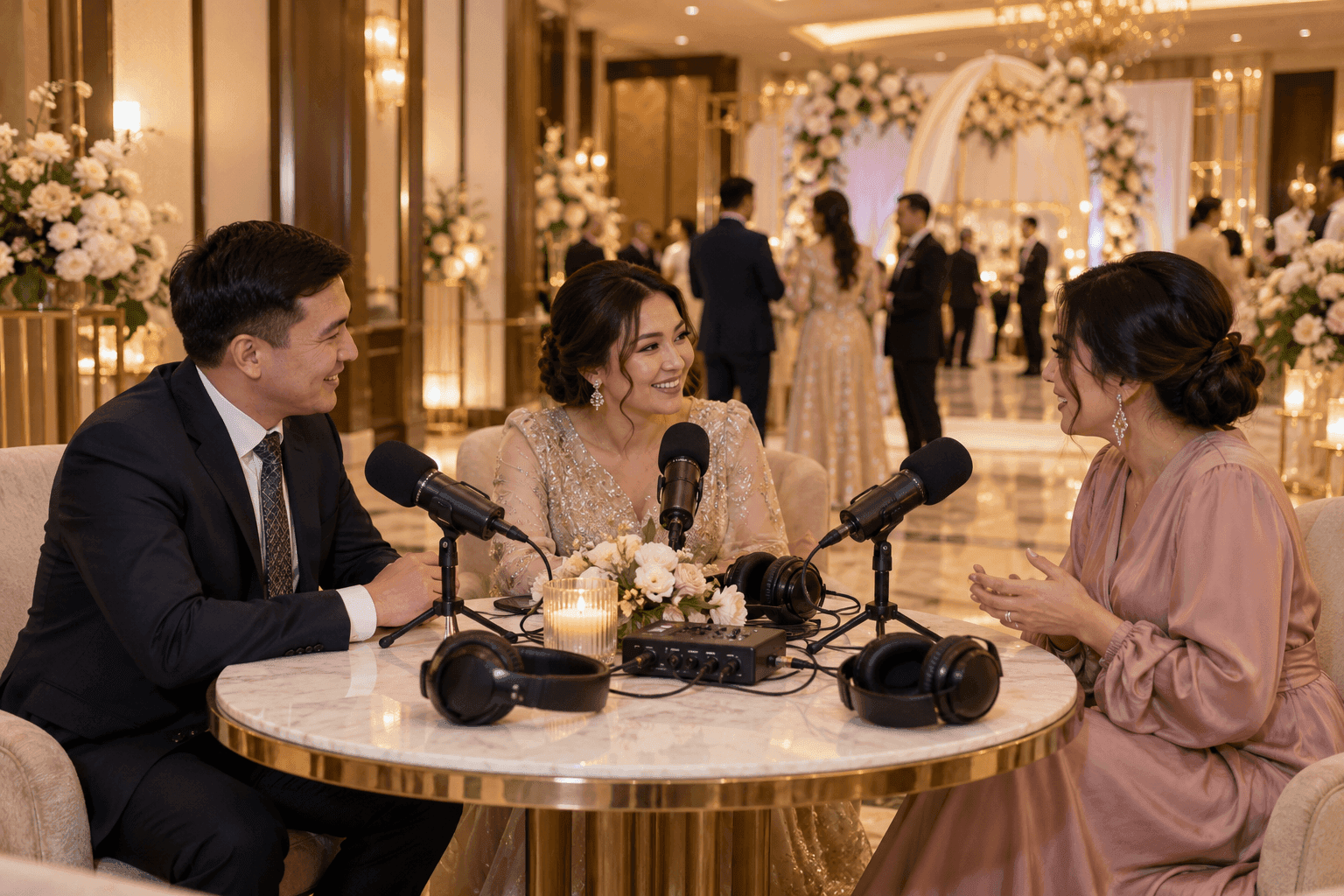
Wedding Podcast 2027
The wedding podcast is quickly finding its place in contemporary celebration programmes. The format began gaining attention in Kazakhstan at the end of summer, while the quieter autumn season gave organisers time to refine the idea for the year ahead. The DanceHub.kz team has already tested it twice and is ready to explain how it works. The podcast corner works best near the entrance to the banquet hall, close to the photo zone and welcome buffet. Recording inside the hall is more difficult: equipment is being checked, lighting and sound are being adjusted, and the service team is completing its final preparations. It is simply too noisy for a relaxed conversation. A small table, three microphones and a neat backdrop are enough to create the studio. Guests arrive, take commemorative photographs, enjoy the buffet and are then invited to record a short story about the newlyweds.
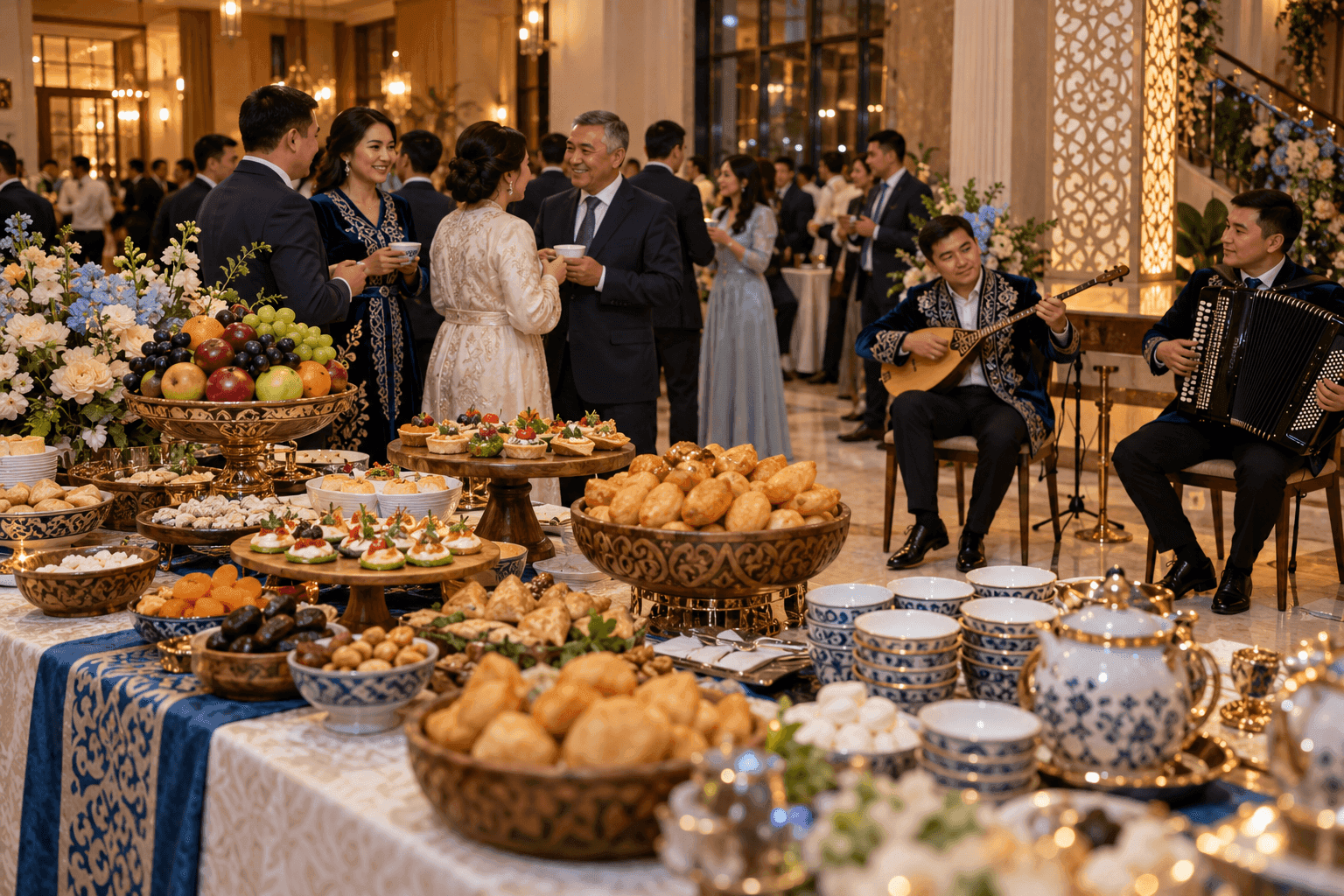
Tips from the DanceHub.kz Organisers
In the first part of our organiser's advice, we explained why a wedding welcome buffet deserves careful attention. Its appearance and presentation shape the first impression of the evening. Now it is time to consider the final touch: the tradition known as Keter Ayaq or Zhol Ayaq. This small ritual takes place at the end of the celebration. Sometimes it uses the same table that held the welcome buffet earlier in the evening. In an alcohol-free celebration, the tradition can be reinterpreted while preserving its most important purpose: seeing guests off with warmth, care and hospitality. The bride has thrown her bouquet, the band has taken the stage, and the second dance interval reflects the newlyweds' own musical taste. The first interval may have featured familiar favourites for the parents' friends and older guests, while the later programme becomes younger and more energetic.
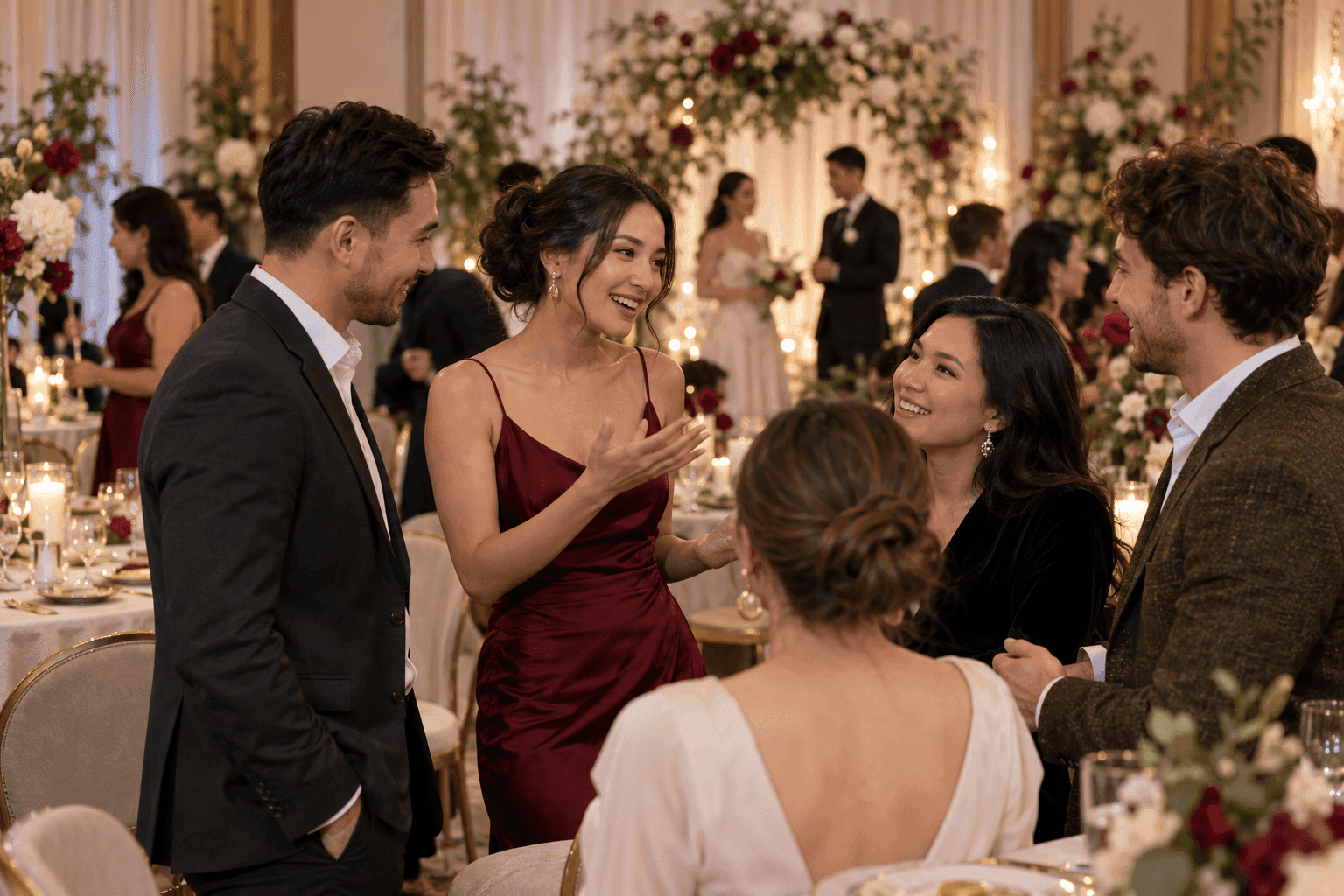
Meeting for a Good Reason: “NOT a Wedding 2027”
Imagine being invited to a wedding and asked to buy a ticket for 20,000-25,000 tenge. The price includes your seat, the menu, drinks, a host and live entertainment. There is just one surprising detail: you know neither the people at your table nor the names of the newlyweds. The bride and groom may not have met before the evening either. This is the idea behind “NOT a Wedding”, a themed party already appearing in selected cities across Europe and the CIS. From the outside, it looks like a real celebration, complete with a welcome buffet, decorations, dinner, toasts and dancing. Its purpose, however, is not marriage. It is designed for conversation, new connections and an unusual cultural experience. Modern city life offers too few natural and comfortable ways for adults to meet. Social media helps people stay connected, but it cannot always replace a face-to-face conversation. “NOT a Wedding” provides a familiar structure in which strangers can introduce themselves, exchange experiences and spend an evening together without the awkwardness of formal networking.
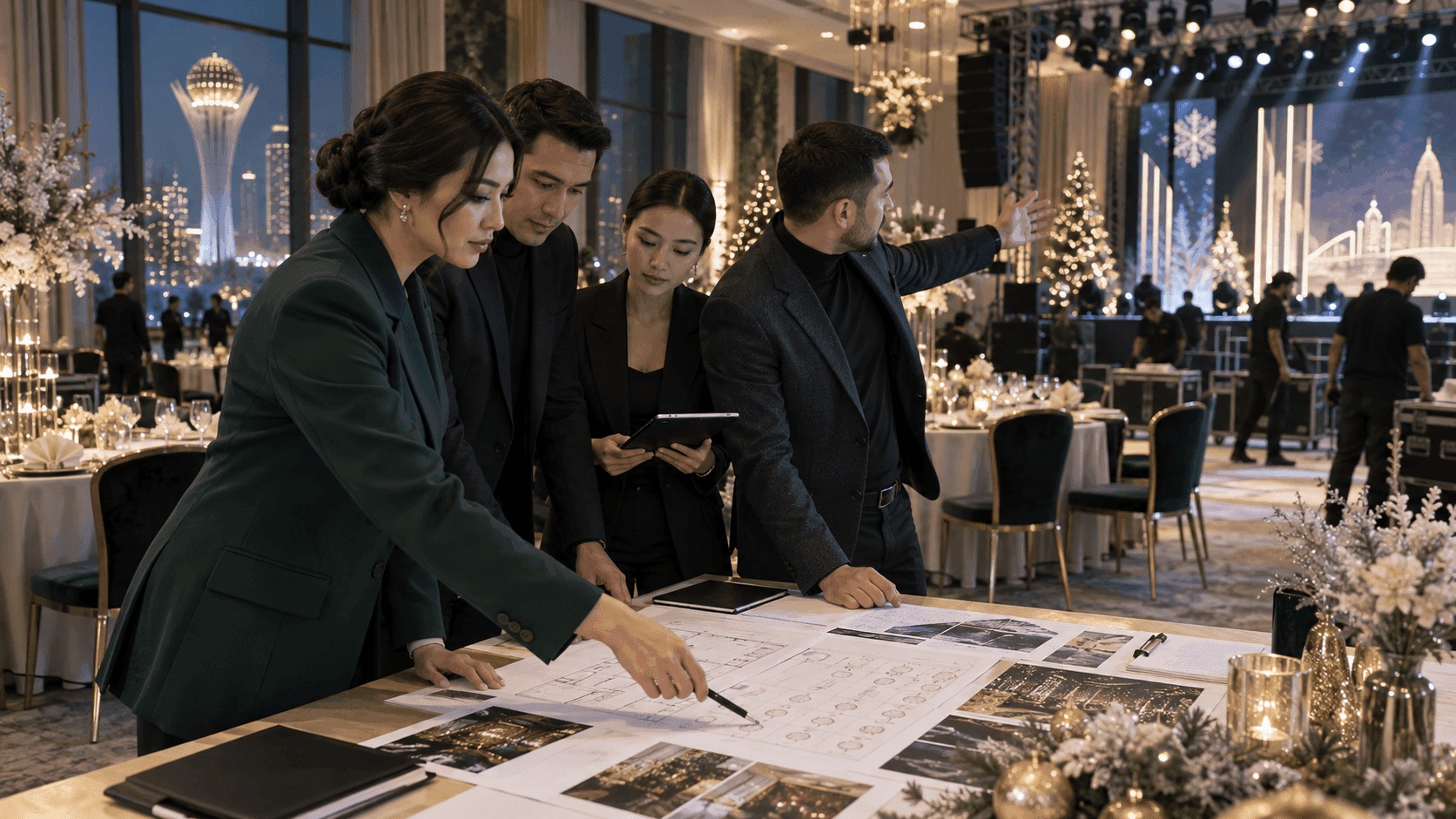
Organising New Year Corporate Events in Astana.
A successful New Year corporate event begins long before December. Large companies often start planning in August, when HR managers research the market, compare suppliers and define the first requirements for the evening. Beginning early gives the team the freedom to choose rather than settle for whatever remains available at the end of the season. It is possible to source a venue, host, performers, decorators and technical crew independently, but doing so requires considerable time and experience. Companies therefore often entrust the project to a professional event agency responsible not only for suppliers but also for the overall logic of the occasion. An event agency is more than an intermediary between a client and performers. It acts as project coordinator, script team, venue administrator and crisis manager on the day itself.
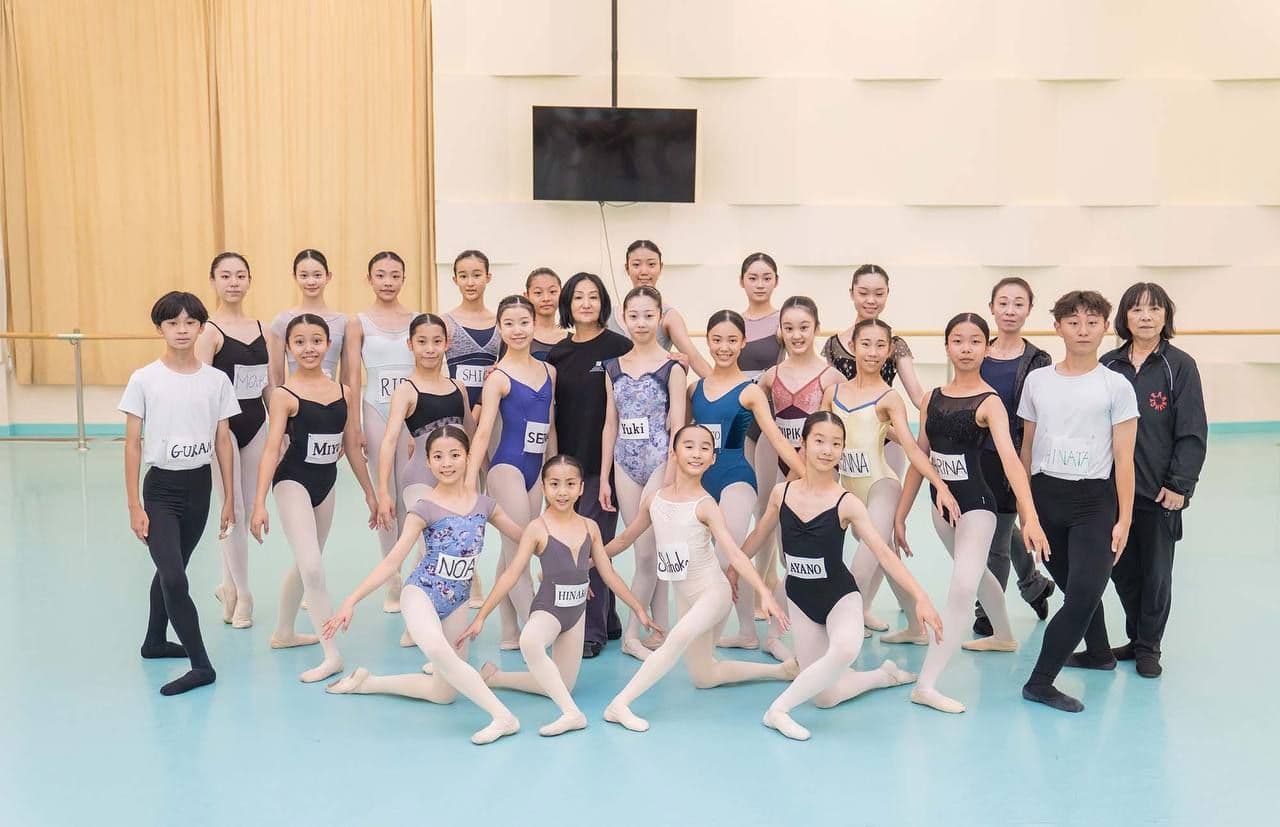
Japanese Delegation Concludes Visit to the Kazakh National Academy of Choreography
The Kazakh National Academy of Choreography has concluded an intensive programme for a delegation from Tokyo's Yoshiko Takagi Ballet School. Twenty-two students and four teachers travelled to Astana to explore Kazakhstan's approach to choreographic education, work with the Academy's leading teachers and exchange professional experience. The Japanese guests followed a focused educational programme. Young dancers took part in masterclasses in classical and folk-stage dance and worked on classical variations drawn from the world's ballet repertoire. Each class offered more than technical practice. It also allowed the students to view familiar elements through a different teaching tradition. For young artists, this kind of exchange broadens their professional outlook and encourages closer attention to every detail of stagecraft.