Organising New Year Corporate Events in Astana.
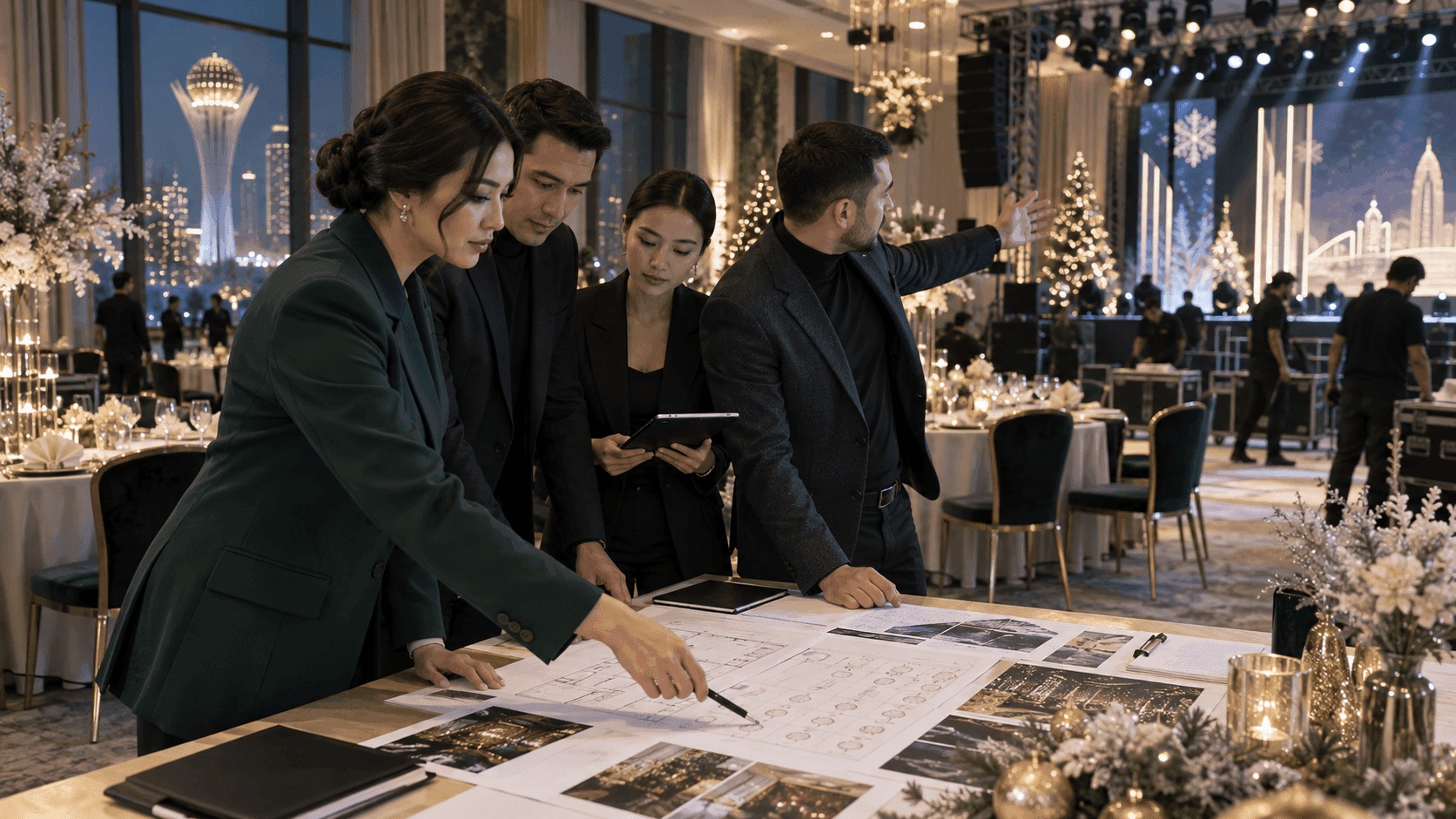
A successful New Year corporate event begins long before December. Large companies often start planning in August, when HR managers research the market, compare suppliers and define the first requirements for the evening. Beginning early gives the team the freedom to choose rather than settle for whatever remains available at the end of the season.
It is possible to source a venue, host, performers, decorators and technical crew independently, but doing so requires considerable time and experience. Companies therefore often entrust the project to a professional event agency responsible not only for suppliers but also for the overall logic of the occasion.
Why a corporate event needs a professional organiser
An event agency is more than an intermediary between a client and performers. It acts as project coordinator, script team, venue administrator and crisis manager on the day itself.
When choosing a partner, assess its corporate experience, completed projects, current portfolio, reputation and network of reliable suppliers. Notice the questions the team asks, the way it handles budgets and how clearly it explains its decisions. A strong organiser does not promise everything at once. It helps the client set the right priorities.
Allow four to six weeks to meet agencies, compare proposals and approve a partner. The process normally begins with portfolios and commercial terms before moving into the creative concept and content of the evening.
How to choose a New Year event concept
The theme should reflect the company's character rather than exist separately from it. Ideas may come from prominent films and cultural trends of the year, the brand's history, team values or the format of the business occasion.
Recognisable concepts remain popular, including the aesthetics of Moulin Rouge, a classic television New Year show, the MET Gala or a major film festival. Unexpected combinations can be just as effective. A Diamonds & Denim theme, for example, pairs the shine of formal decor with relaxed denim looks for guests.
A strong concept simplifies dozens of later decisions, from invitations and dress code to performers, music, decor and interactive areas.
What to detail after approving the theme
Once the agency and concept have been selected, practical development begins. The team decides which performers belong in the programme, who should host, whether employees will take part in the show and how the budget should be divided between the venue, technical production, decor and content.
This is also the time to design the employee care programme: comfortable seating, transport, navigation, dietary requirements, the length of the formal segment and opportunities for relaxed conversation. An excellent corporate event considers the entire guest journey, from receiving the invitation to arriving home.
A large number of performers does not guarantee a strong programme. A few excellent acts connected by clear direction and pacing will achieve more than an overloaded running order.
Who should be booked first
The host and principal musical act are among the evening's most important appointments. They carry responsibility for the atmosphere, pace and interaction with guests. The host should be tactful, intelligent and experienced, particularly when business partners and senior leaders are attending.
Popular professionals and strong musical groups receive bookings well in advance, so it is best to confirm them by October. As December approaches, fewer dates remain available and it becomes harder to assemble a programme without compromise.
When to begin planning
An effective schedule looks like this:
- August - define the brief and preliminary budget;
- September - select the agency, venue and concept;
- October - book the host and key performers;
- November - approve the script, decor and technical production;
- December - hold rehearsals, complete final checks and deliver the event.
If planning begins later, an experienced organiser can still create an excellent evening, but the choice of venues and performers will be narrower.
DanceHub.kz offers a free consultation and helps companies find performers and professional event suppliers for New Year corporate celebrations in Astana. The earlier the process begins, the more opportunities there are to create an occasion the whole team will be proud of.
Recommended articles
Wedding Podcast 2027
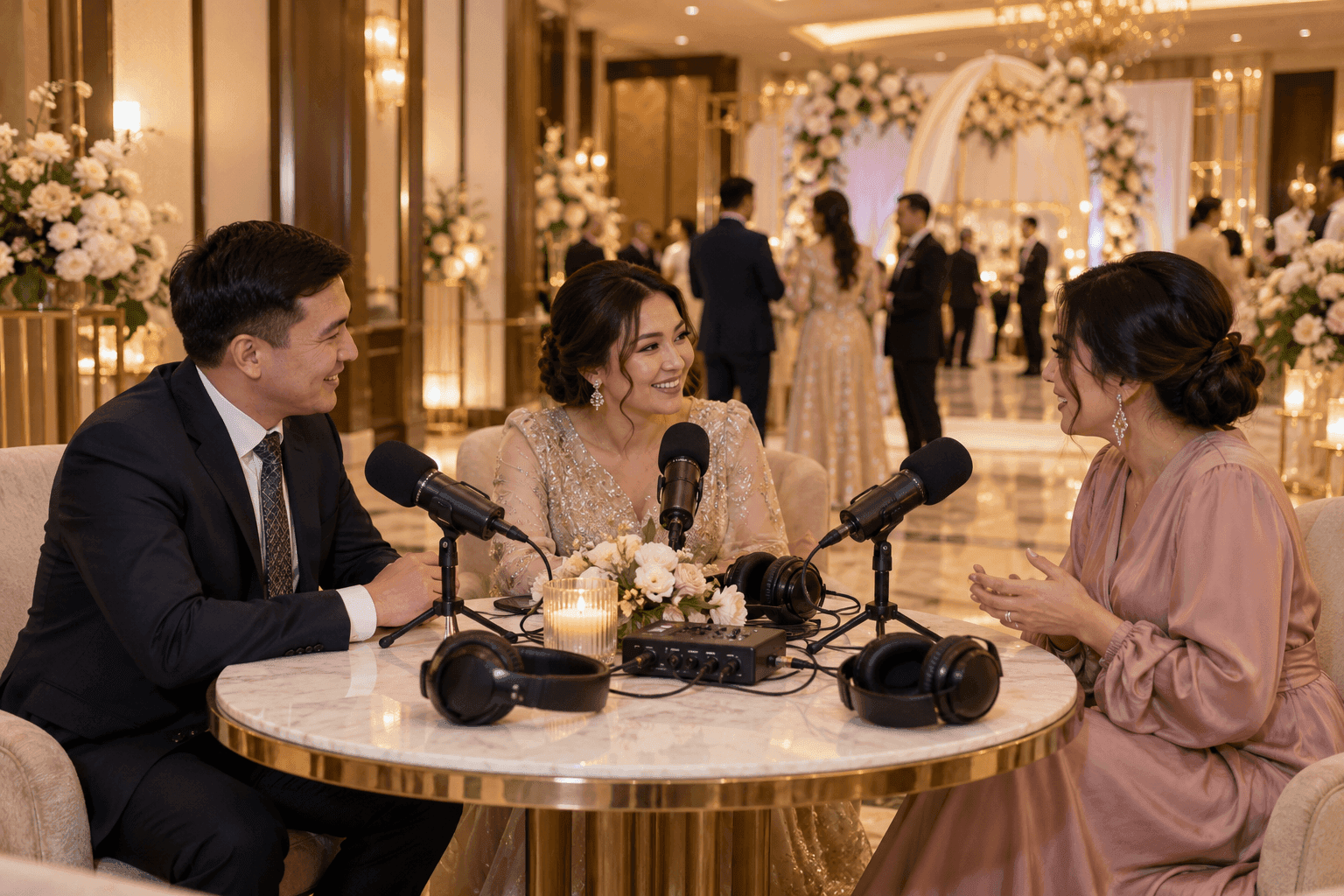
The wedding podcast is quickly finding its place in contemporary celebration programmes. The format began gaining attention in Kazakhstan at the end of summer, while the quieter autumn season gave organisers time to refine the idea for the year ahead. The DanceHub.kz team has already tested it twice and is ready to explain how it works. The podcast corner works best near the entrance to the banquet hall, close to the photo zone and welcome buffet. Recording inside the hall is more difficult: equipment is being checked, lighting and sound are being adjusted, and the service team is completing its final preparations. It is simply too noisy for a relaxed conversation. A small table, three microphones and a neat backdrop are enough to create the studio. Guests arrive, take commemorative photographs, enjoy the buffet and are then invited to record a short story about the newlyweds.
Tips from the DanceHub.kz Organisers
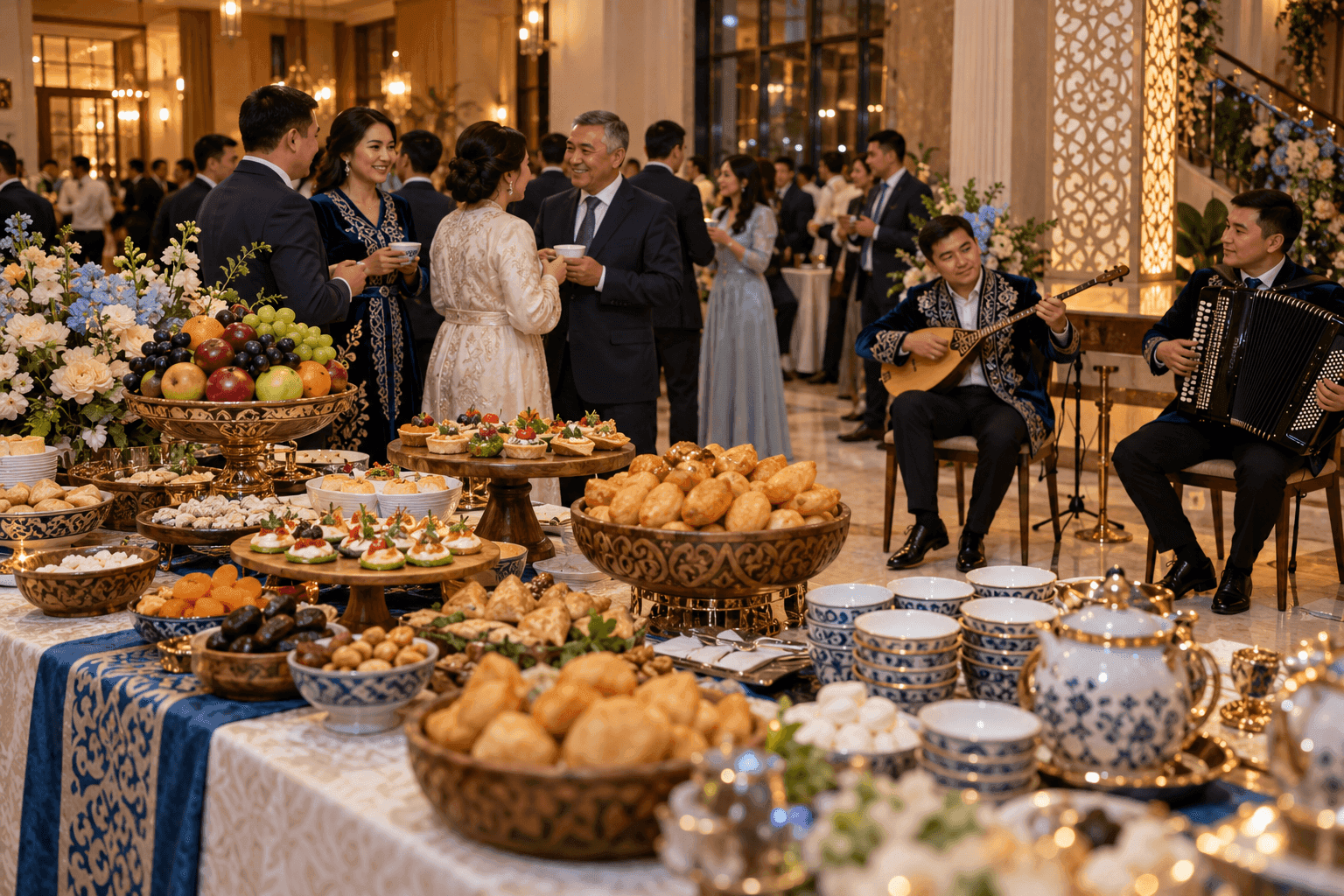
In the first part of our organiser's advice, we explained why a wedding welcome buffet deserves careful attention. Its appearance and presentation shape the first impression of the evening. Now it is time to consider the final touch: the tradition known as Keter Ayaq or Zhol Ayaq. This small ritual takes place at the end of the celebration. Sometimes it uses the same table that held the welcome buffet earlier in the evening. In an alcohol-free celebration, the tradition can be reinterpreted while preserving its most important purpose: seeing guests off with warmth, care and hospitality. The bride has thrown her bouquet, the band has taken the stage, and the second dance interval reflects the newlyweds' own musical taste. The first interval may have featured familiar favourites for the parents' friends and older guests, while the later programme becomes younger and more energetic.
Meeting for a Good Reason: “NOT a Wedding 2027”
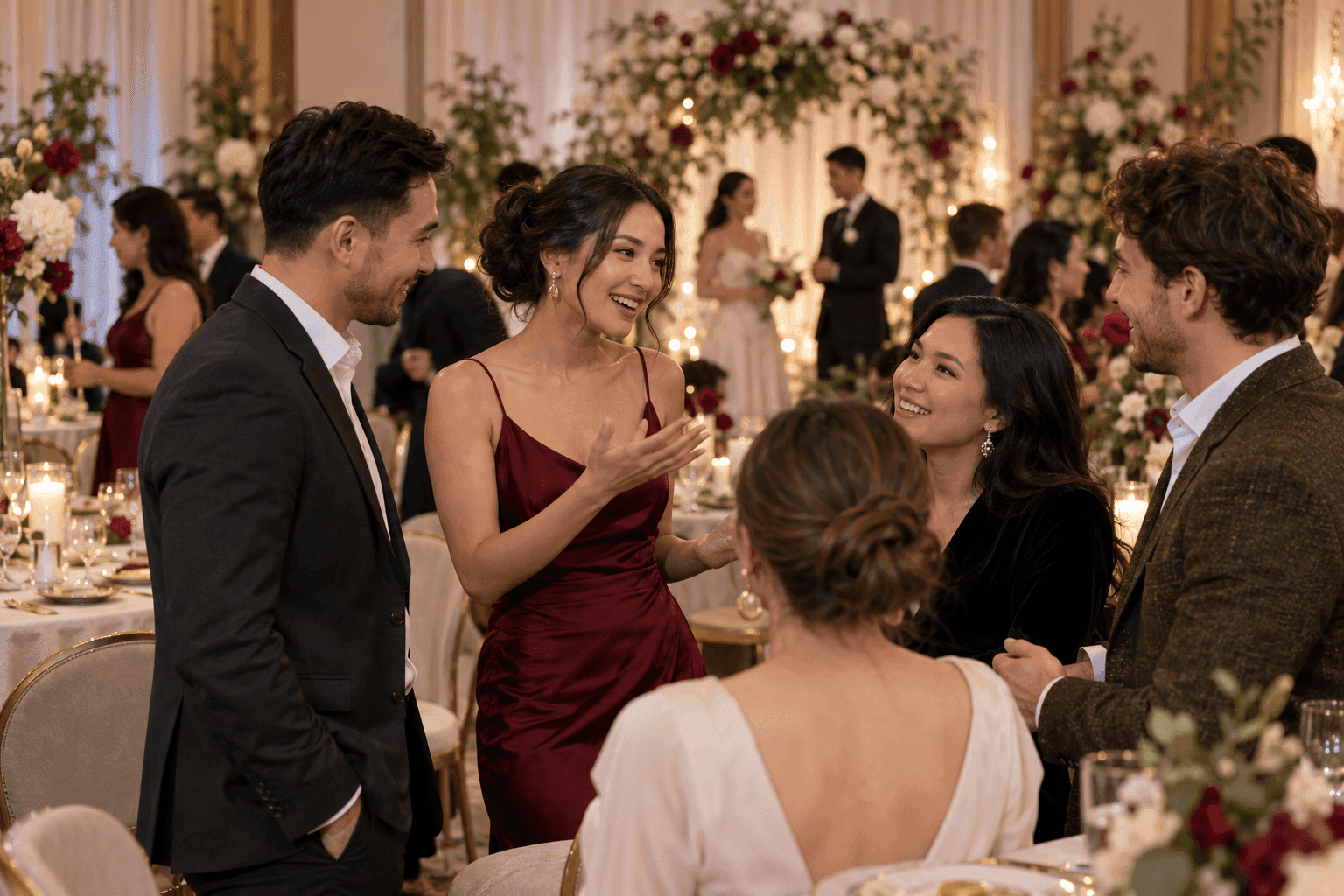
Imagine being invited to a wedding and asked to buy a ticket for 20,000-25,000 tenge. The price includes your seat, the menu, drinks, a host and live entertainment. There is just one surprising detail: you know neither the people at your table nor the names of the newlyweds. The bride and groom may not have met before the evening either. This is the idea behind “NOT a Wedding”, a themed party already appearing in selected cities across Europe and the CIS. From the outside, it looks like a real celebration, complete with a welcome buffet, decorations, dinner, toasts and dancing. Its purpose, however, is not marriage. It is designed for conversation, new connections and an unusual cultural experience. Modern city life offers too few natural and comfortable ways for adults to meet. Social media helps people stay connected, but it cannot always replace a face-to-face conversation. “NOT a Wedding” provides a familiar structure in which strangers can introduce themselves, exchange experiences and spend an evening together without the awkwardness of formal networking.

Show-Stopping Performers for Your New Year Corporate Party
New Year comes only once, so a corporate celebration should become an occasion colleagues remember fondly long after the final song. It is more than a festive dinner. It is an opportunity to thank the team, strengthen company culture and bring the business year to an elegant close. The quality of the evening also says a great deal about the company, especially when partners, senior leaders, public figures or international guests are attending. The programme should feel dynamic, appropriate and professionally paced. Performers should not appear as a random sequence of acts, but as an integral part of the event's story. We have selected three musical projects that can set the right tempo for a New Year corporate party and turn key moments of the evening into memorable stage events.
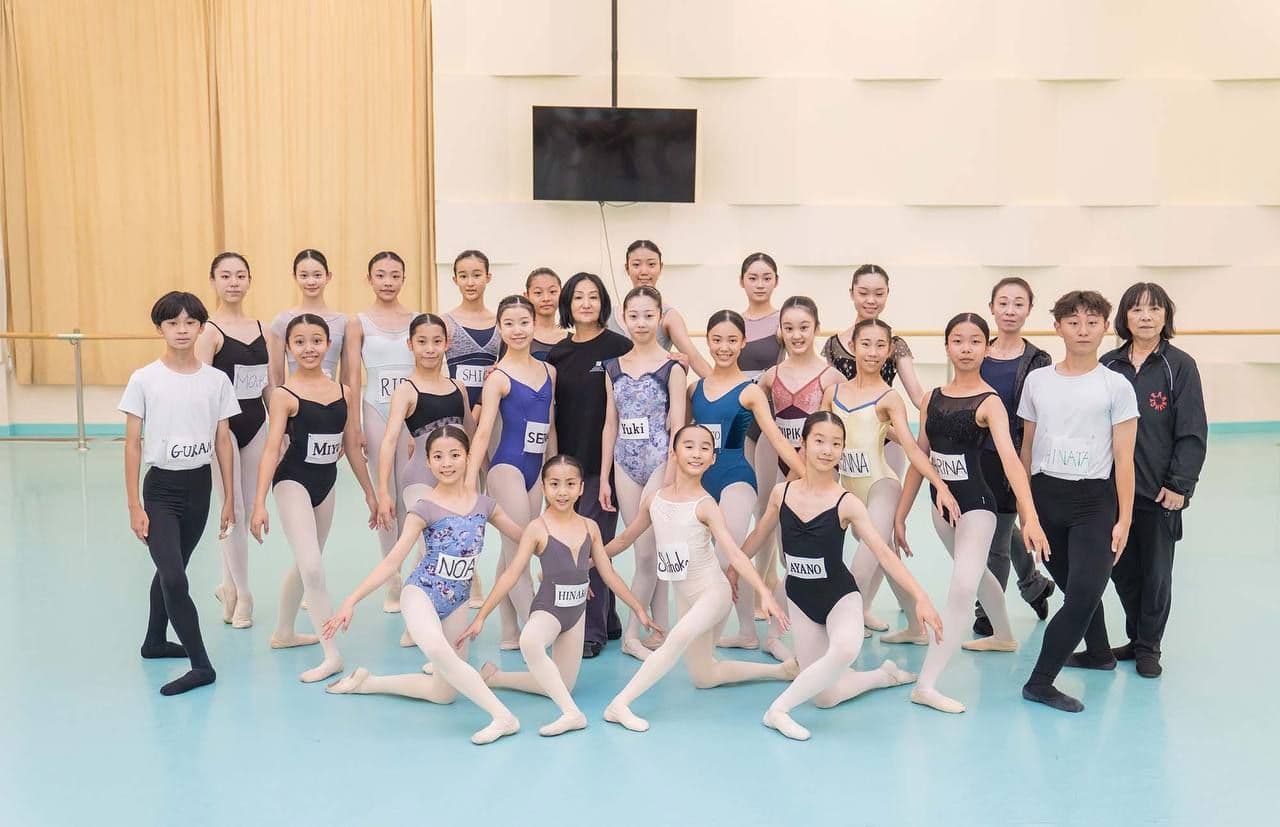
Japanese Delegation Concludes Visit to the Kazakh National Academy of Choreography
The Kazakh National Academy of Choreography has concluded an intensive programme for a delegation from Tokyo's Yoshiko Takagi Ballet School. Twenty-two students and four teachers travelled to Astana to explore Kazakhstan's approach to choreographic education, work with the Academy's leading teachers and exchange professional experience. The Japanese guests followed a focused educational programme. Young dancers took part in masterclasses in classical and folk-stage dance and worked on classical variations drawn from the world's ballet repertoire. Each class offered more than technical practice. It also allowed the students to view familiar elements through a different teaching tradition. For young artists, this kind of exchange broadens their professional outlook and encourages closer attention to every detail of stagecraft.