DanceHub.kz - Your Guide to Cultural Events in the Capital.
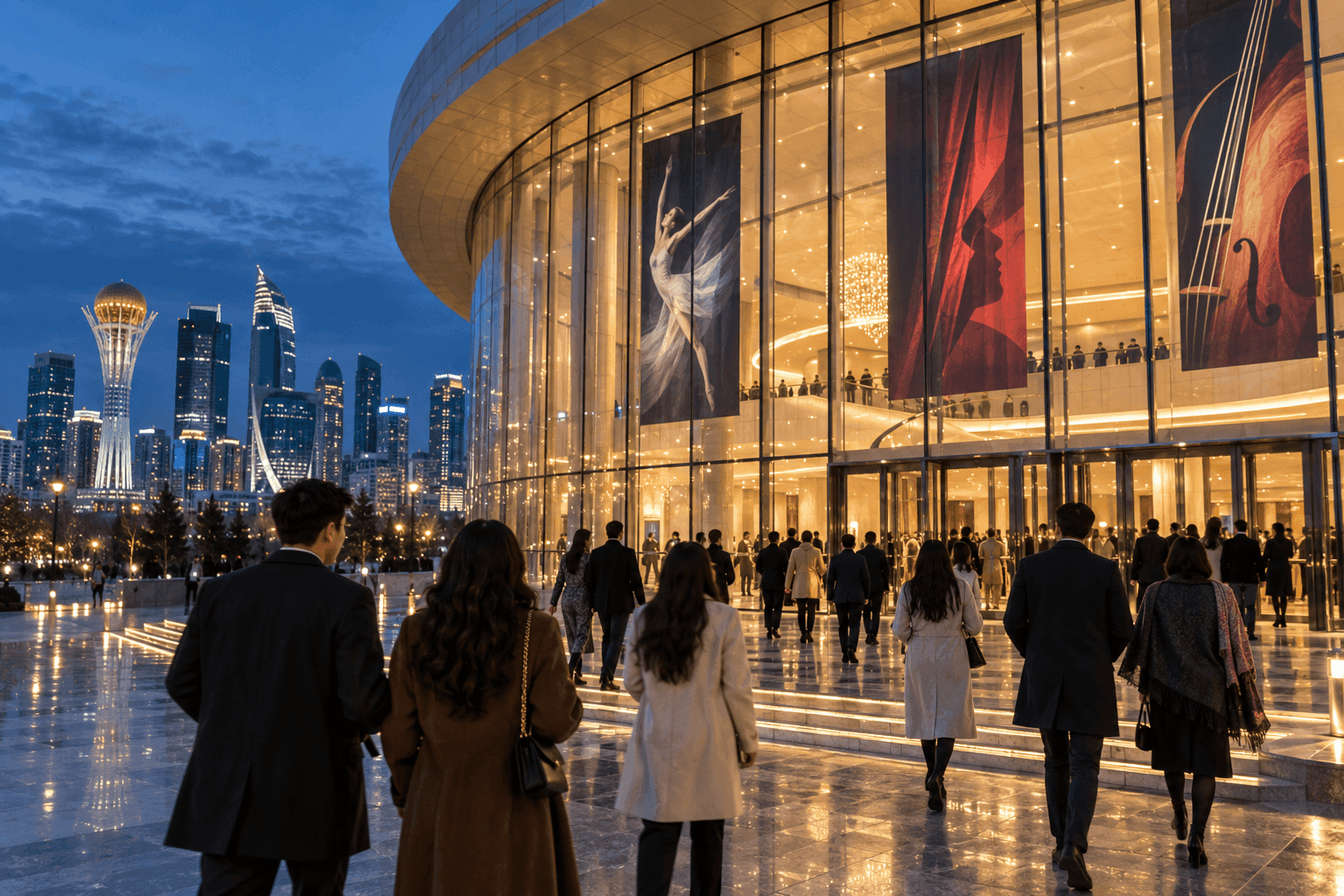
Astana's new theatre season has begun with eagerly awaited premieres, vibrant concert programmes and renewed encounters with audiences. Astana Opera, Astana Ballet, the Qazaqstan Central Concert Hall named after Roza Baglanova and other cultural venues across the capital have opened their doors once again to loyal visitors and those just beginning to discover the arts.
DanceHub.kz is beginning a new season alongside them. We cover the city's most important cultural events, help readers choose performances, concerts and exhibitions, and reveal the moments that usually remain behind the scenes.
Beyond premieres: life behind the curtain
The DanceHub.kz team of journalists and mobile content creators does more than attend opening nights. We visit rehearsals, speak with artists and follow the birth of a production, from the first movements in the studio to the stage lights and the audience's applause.
Rehearsal days reveal just how much work lies behind the apparent ease of a finished performance. Movement, music, costumes, lighting and the director's idea gradually come together as one complete work. We want to bring this process closer to our readers, so that a visit to the theatre begins long before they enter the auditorium.
Our reporting season opened with the production Two Carpets at Astana Ballet. The DanceHub.kz team then attended new performances and programmes at other venues in the capital.
At the same time, we followed the cultural programme of the VI World Nomad Games in Kyrgyzstan. Kazakhstan's Gulder Ensemble won the Grand Prix at the international Ethno-Dance competition held as part of Nomad Fest. The victory offered another striking demonstration of the strength of Kazakhstan's choreography and the expressive power of its national performing arts.
A new generation is choosing culture
DanceHub.kz correspondents have noticed an encouraging trend: more school pupils and university students are appearing in theatres and concert halls. Young audiences are choosing ballet, drama, concerts and exhibitions not only through organised educational visits, but also on their own initiative.
Art remains one of the most sincere sources of inspiration. It teaches us to look more deeply, feel more precisely and turn an idea into reality. In the age of artificial intelligence, the ability to think creatively, find a personal voice and observe the world attentively has become an especially valuable part of personal development.
Discover Astana's cultural life with DanceHub.kz
The capital offers countless reasons to step beyond a familiar routine: see a premiere, hear a live orchestra, discover a new artist or experience the rehearsal of a major production for the first time.
Follow the announcements, reviews and behind-the-scenes reports on DanceHub.kz. We will help you find the events that inspire conversation, bring you back to the auditorium and encourage you to keep looking for inspiration through art.
Recommended articles
Wedding Podcast 2027
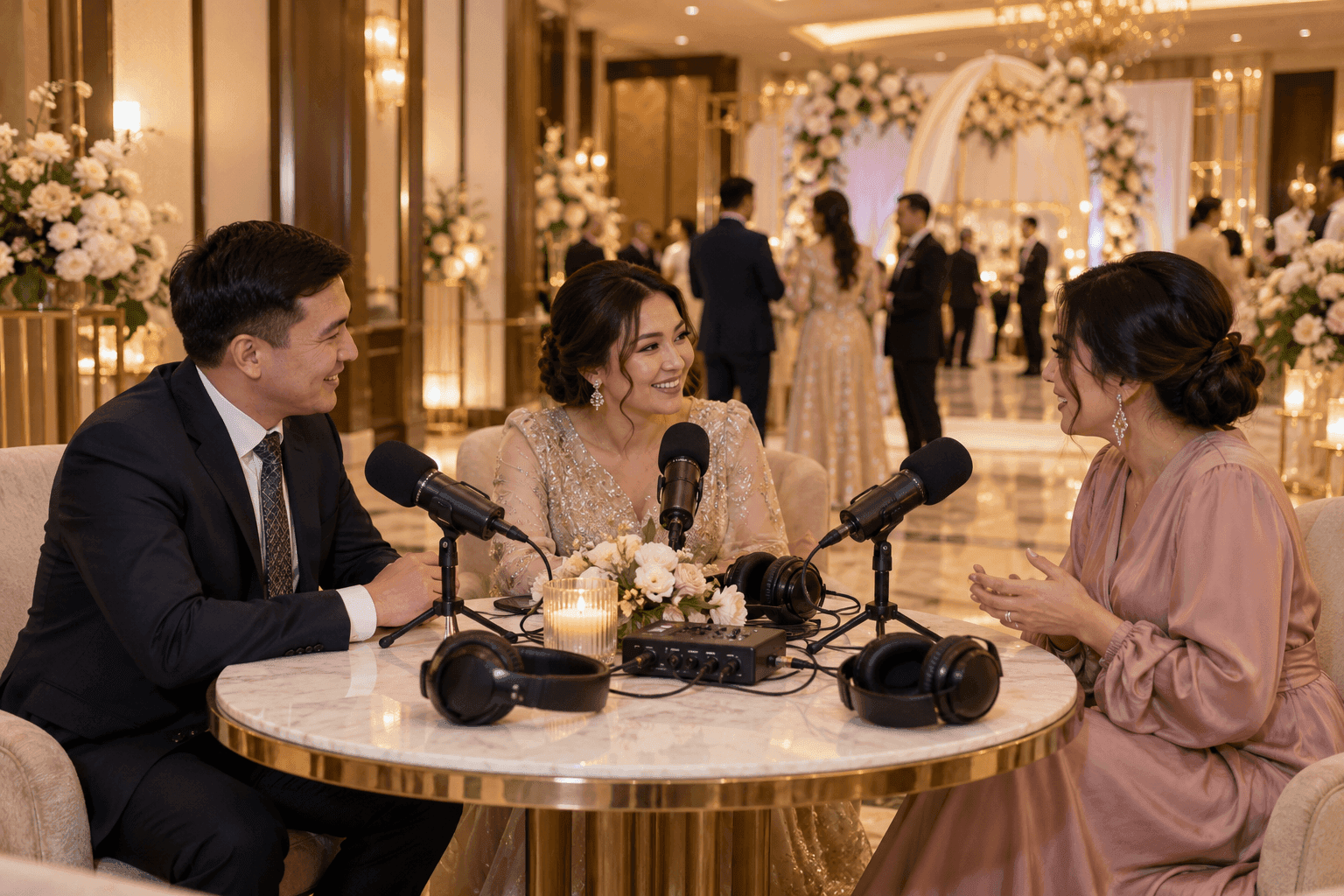
The wedding podcast is quickly finding its place in contemporary celebration programmes. The format began gaining attention in Kazakhstan at the end of summer, while the quieter autumn season gave organisers time to refine the idea for the year ahead. The DanceHub.kz team has already tested it twice and is ready to explain how it works. The podcast corner works best near the entrance to the banquet hall, close to the photo zone and welcome buffet. Recording inside the hall is more difficult: equipment is being checked, lighting and sound are being adjusted, and the service team is completing its final preparations. It is simply too noisy for a relaxed conversation. A small table, three microphones and a neat backdrop are enough to create the studio. Guests arrive, take commemorative photographs, enjoy the buffet and are then invited to record a short story about the newlyweds.
Tips from the DanceHub.kz Organisers
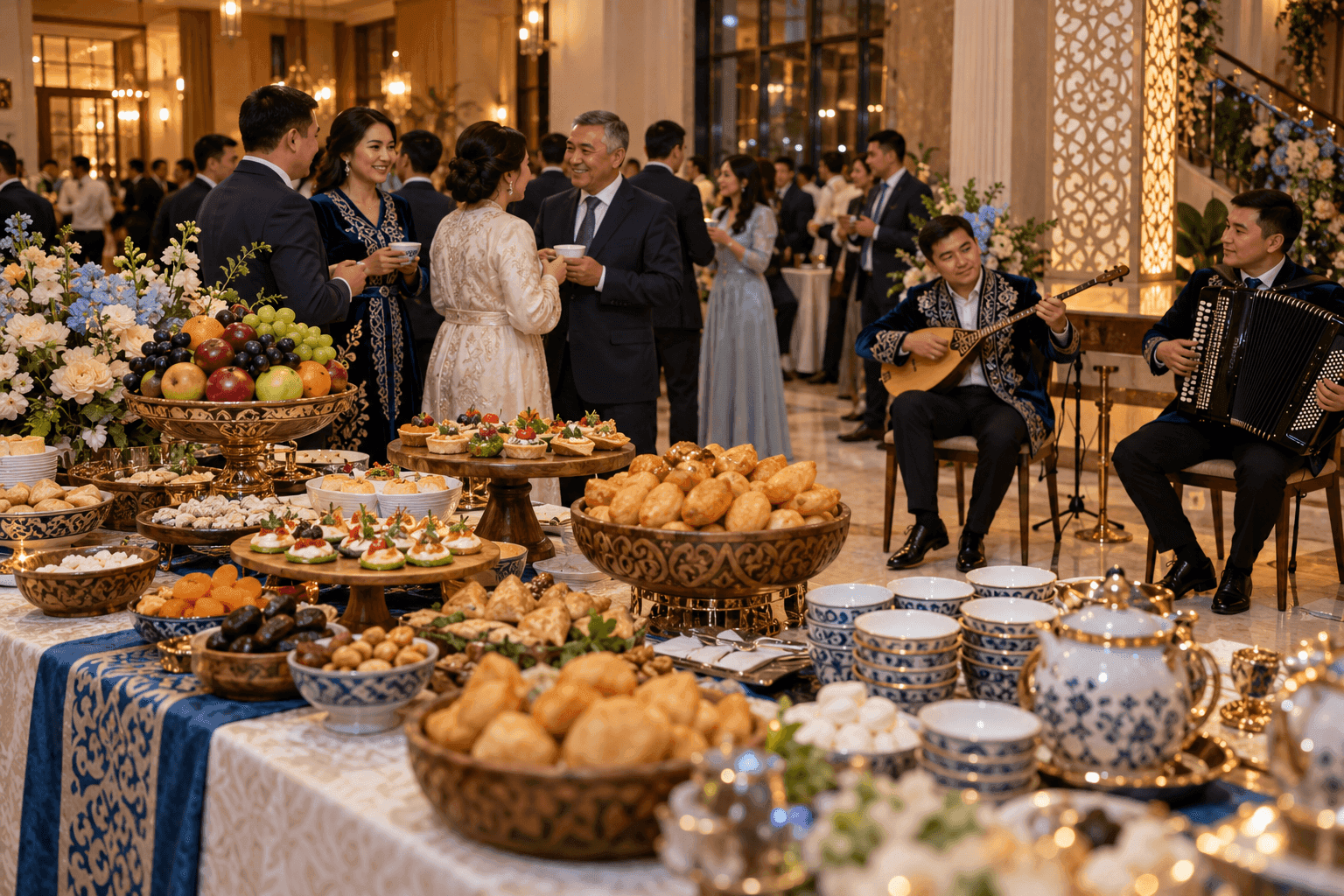
In the first part of our organiser's advice, we explained why a wedding welcome buffet deserves careful attention. Its appearance and presentation shape the first impression of the evening. Now it is time to consider the final touch: the tradition known as Keter Ayaq or Zhol Ayaq. This small ritual takes place at the end of the celebration. Sometimes it uses the same table that held the welcome buffet earlier in the evening. In an alcohol-free celebration, the tradition can be reinterpreted while preserving its most important purpose: seeing guests off with warmth, care and hospitality. The bride has thrown her bouquet, the band has taken the stage, and the second dance interval reflects the newlyweds' own musical taste. The first interval may have featured familiar favourites for the parents' friends and older guests, while the later programme becomes younger and more energetic.
Meeting for a Good Reason: “NOT a Wedding 2027”
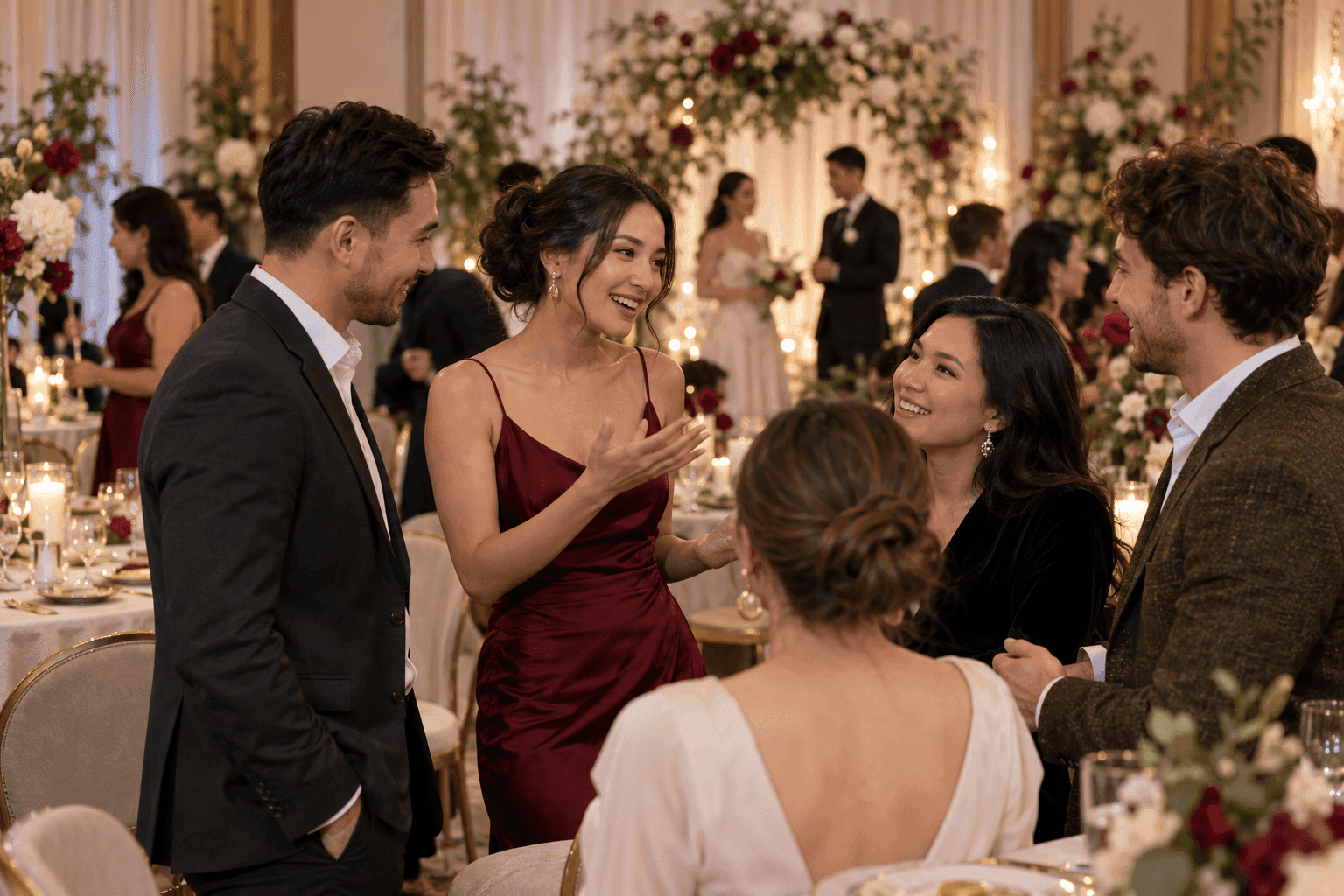
Imagine being invited to a wedding and asked to buy a ticket for 20,000-25,000 tenge. The price includes your seat, the menu, drinks, a host and live entertainment. There is just one surprising detail: you know neither the people at your table nor the names of the newlyweds. The bride and groom may not have met before the evening either. This is the idea behind “NOT a Wedding”, a themed party already appearing in selected cities across Europe and the CIS. From the outside, it looks like a real celebration, complete with a welcome buffet, decorations, dinner, toasts and dancing. Its purpose, however, is not marriage. It is designed for conversation, new connections and an unusual cultural experience. Modern city life offers too few natural and comfortable ways for adults to meet. Social media helps people stay connected, but it cannot always replace a face-to-face conversation. “NOT a Wedding” provides a familiar structure in which strangers can introduce themselves, exchange experiences and spend an evening together without the awkwardness of formal networking.
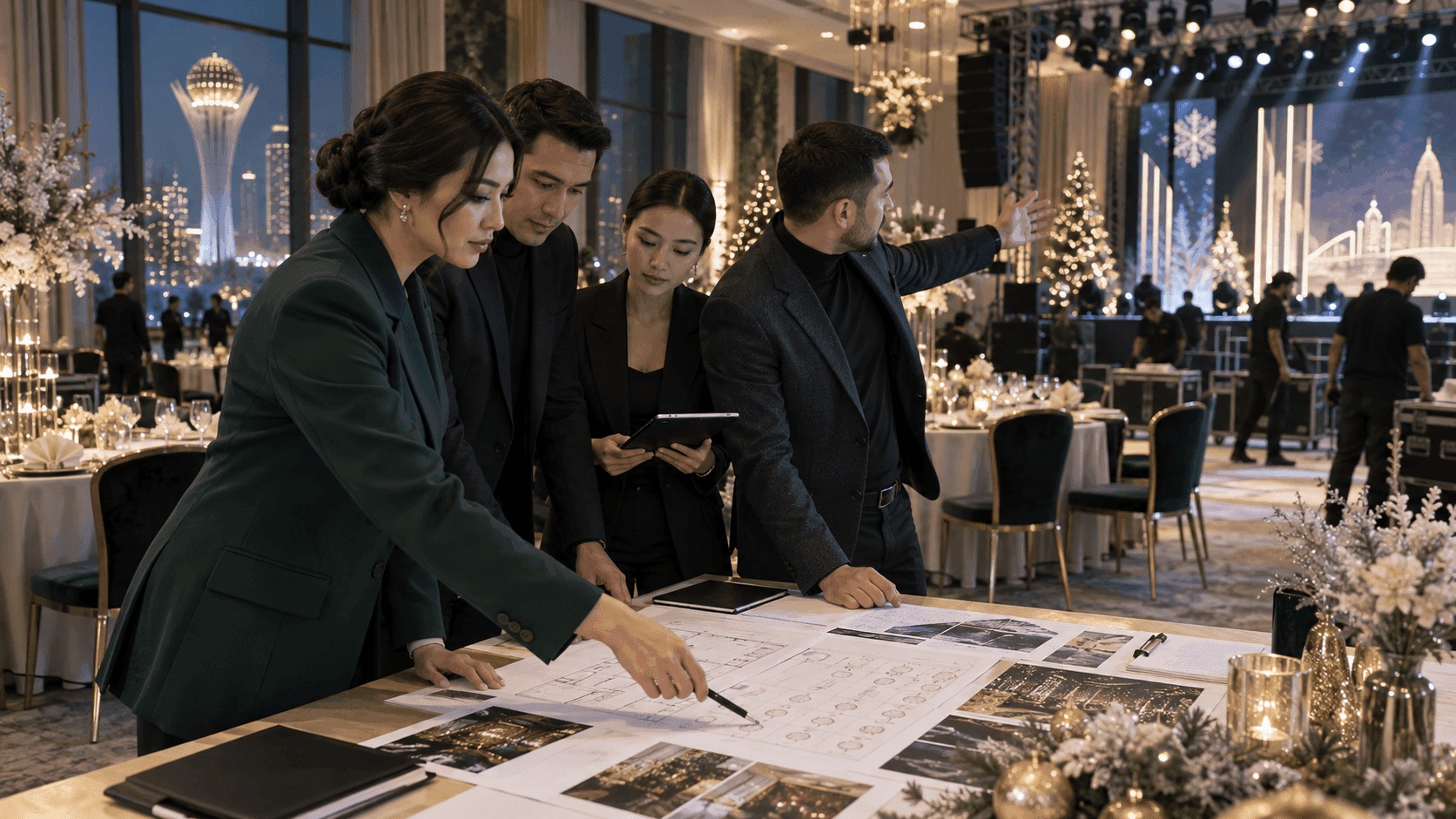
Organising New Year Corporate Events in Astana.
A successful New Year corporate event begins long before December. Large companies often start planning in August, when HR managers research the market, compare suppliers and define the first requirements for the evening. Beginning early gives the team the freedom to choose rather than settle for whatever remains available at the end of the season. It is possible to source a venue, host, performers, decorators and technical crew independently, but doing so requires considerable time and experience. Companies therefore often entrust the project to a professional event agency responsible not only for suppliers but also for the overall logic of the occasion. An event agency is more than an intermediary between a client and performers. It acts as project coordinator, script team, venue administrator and crisis manager on the day itself.
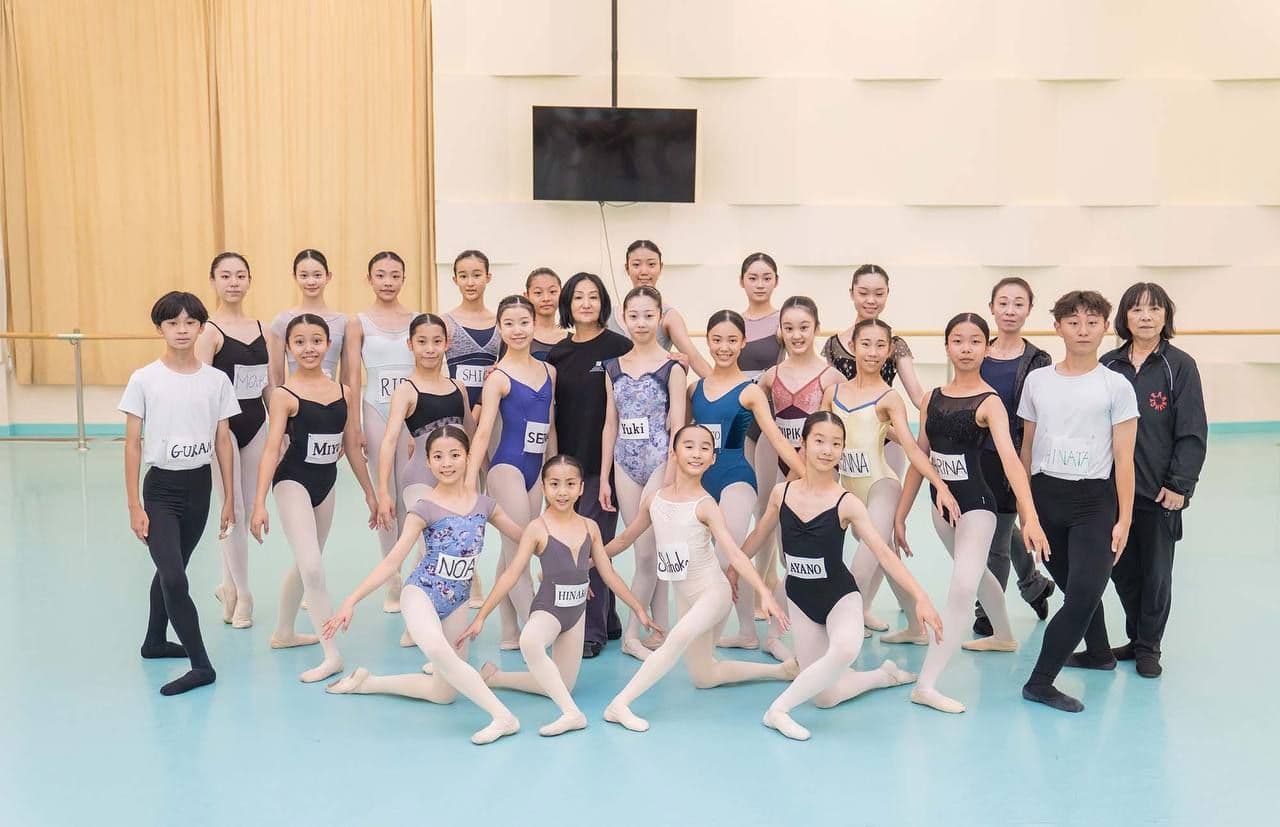
Japanese Delegation Concludes Visit to the Kazakh National Academy of Choreography
The Kazakh National Academy of Choreography has concluded an intensive programme for a delegation from Tokyo's Yoshiko Takagi Ballet School. Twenty-two students and four teachers travelled to Astana to explore Kazakhstan's approach to choreographic education, work with the Academy's leading teachers and exchange professional experience. The Japanese guests followed a focused educational programme. Young dancers took part in masterclasses in classical and folk-stage dance and worked on classical variations drawn from the world's ballet repertoire. Each class offered more than technical practice. It also allowed the students to view familiar elements through a different teaching tradition. For young artists, this kind of exchange broadens their professional outlook and encourages closer attention to every detail of stagecraft.