Kazakh wedding in Astana: how to book and what has changed?

Today, organizing a high-quality concert program for a Kazakh wedding in Astana can cost around 2 million tenge as a full-service package. And believe it, this budget can provide professionally selected performers. It usually includes an experienced and tactful host who works well with any audience and charges a fair fee, as well as a professional theater group of 7 performers who will accompany your celebration with national performances at a solid level.
One of the unique features of such a theater group is its versatility. After welcoming the in-laws (kudalar), the male performers can transform into a vocal trio and present an impressive retro music block. Meanwhile, the female performers can change into traditional costumes and perform the “Kamazhai” dance and other national dances, nicely enriching the overall wedding scenario.
With a team of about 8 people, you get a complete package: a bilingual host, theatrical performances for welcoming guests, the bride’s entrance, and depending on the format — the “synsu” farewell ritual or even a special performance for the traditional serving of meat.
What makes it even more attractive is that the 2 million tenge package may also include a DJ, a sound engineer, a mobile videographer covering the entire event, and even a coordinator who will professionally manage the whole program.
As professionals with over 20 years of experience in organizing weddings in Astana, we often recommend that clients consider package deals. In the post-pandemic period, the price-to-quality ratio has become a key factor for most customers.
There are, however, a couple of minor нюances. The first is limited flexibility, since you are choosing from a pre-designed scenario. But this can be easily solved by adding extra performers, including popular Kazakh artists, if needed.
The second nuance is high demand. These packages are often booked 2–3 months in advance, especially during the wedding season.
For example, if you are reading this in March, most Saturdays in July for this type of package are likely already fully booked. There are also options priced at 1.5, 2.5, and even 3 million tenge, but these are better discussed in person with a professional wedding planner rather than online.
Recommended articles
Wedding Podcast 2027
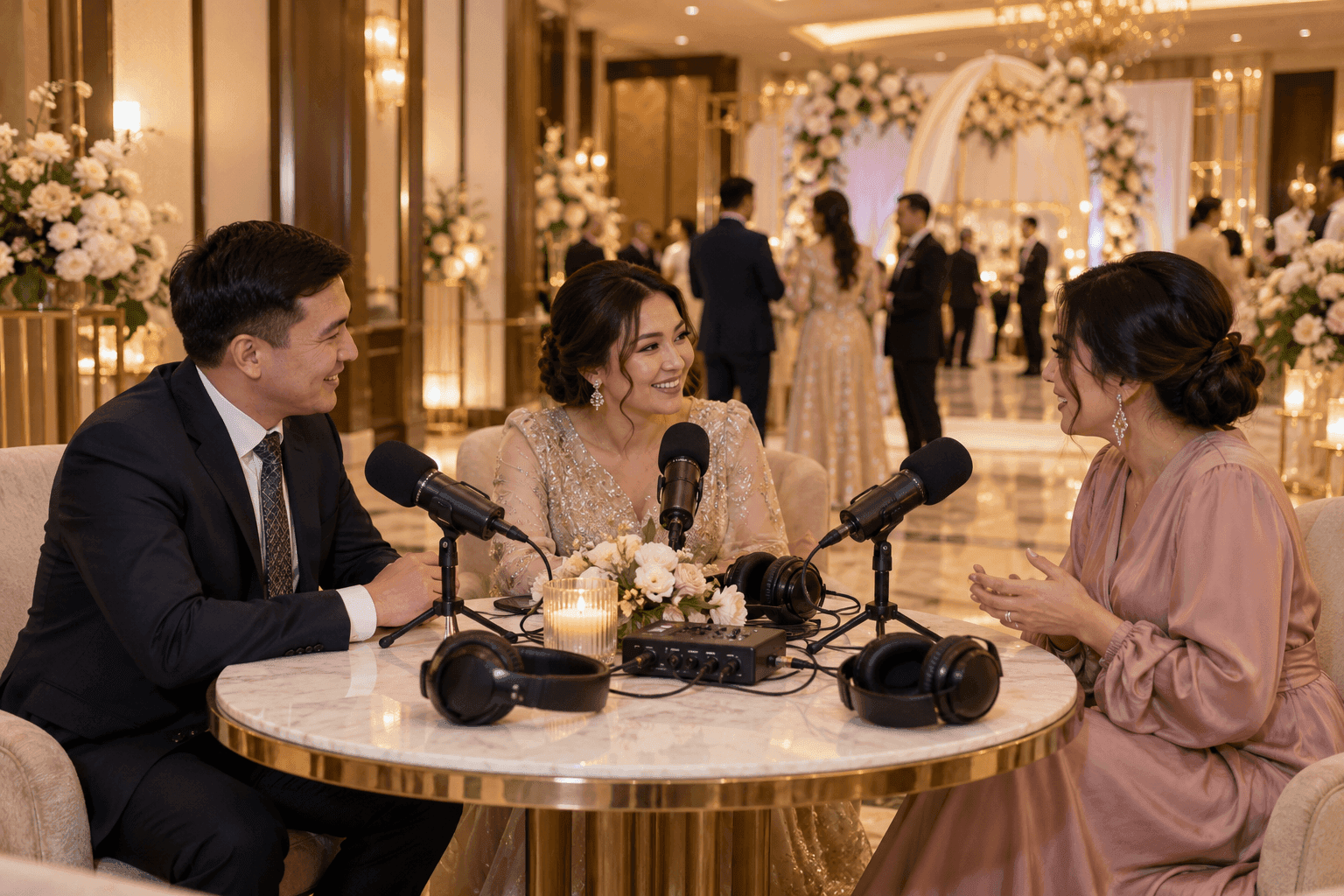
The wedding podcast is quickly finding its place in contemporary celebration programmes. The format began gaining attention in Kazakhstan at the end of summer, while the quieter autumn season gave organisers time to refine the idea for the year ahead. The DanceHub.kz team has already tested it twice and is ready to explain how it works. The podcast corner works best near the entrance to the banquet hall, close to the photo zone and welcome buffet. Recording inside the hall is more difficult: equipment is being checked, lighting and sound are being adjusted, and the service team is completing its final preparations. It is simply too noisy for a relaxed conversation. A small table, three microphones and a neat backdrop are enough to create the studio. Guests arrive, take commemorative photographs, enjoy the buffet and are then invited to record a short story about the newlyweds.
Tips from the DanceHub.kz Organisers
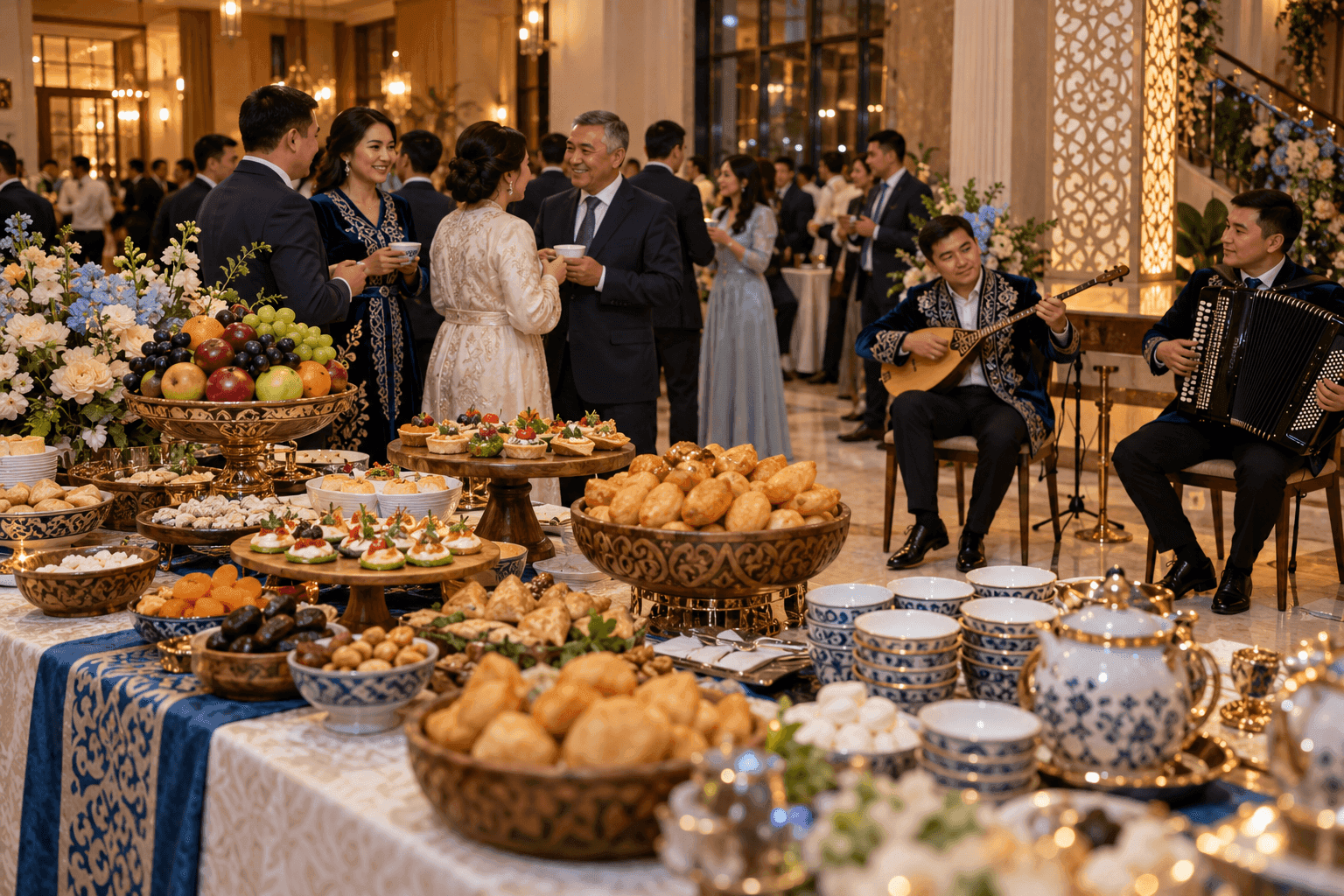
In the first part of our organiser's advice, we explained why a wedding welcome buffet deserves careful attention. Its appearance and presentation shape the first impression of the evening. Now it is time to consider the final touch: the tradition known as Keter Ayaq or Zhol Ayaq. This small ritual takes place at the end of the celebration. Sometimes it uses the same table that held the welcome buffet earlier in the evening. In an alcohol-free celebration, the tradition can be reinterpreted while preserving its most important purpose: seeing guests off with warmth, care and hospitality. The bride has thrown her bouquet, the band has taken the stage, and the second dance interval reflects the newlyweds' own musical taste. The first interval may have featured familiar favourites for the parents' friends and older guests, while the later programme becomes younger and more energetic.
Meeting for a Good Reason: “NOT a Wedding 2027”
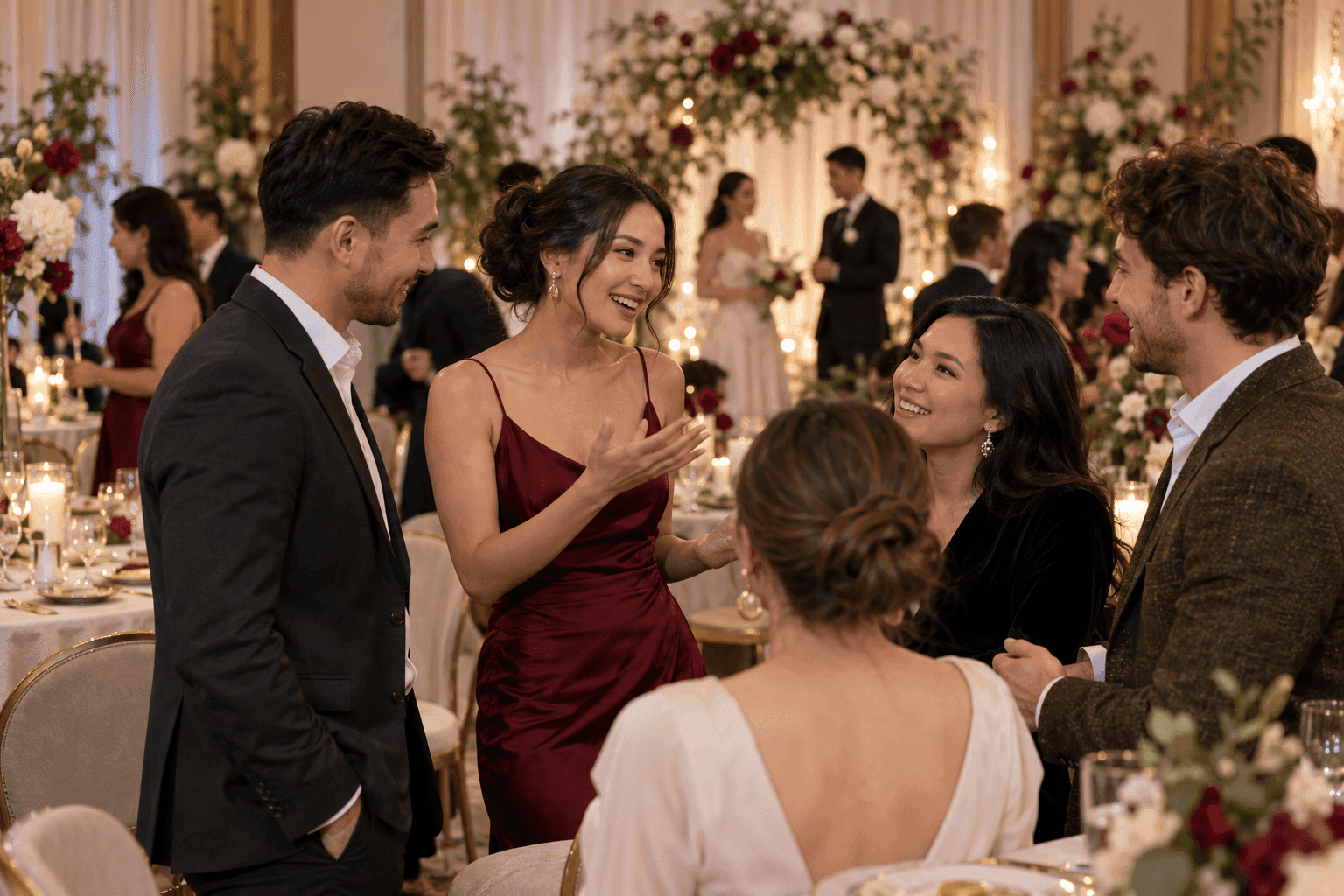
Imagine being invited to a wedding and asked to buy a ticket for 20,000-25,000 tenge. The price includes your seat, the menu, drinks, a host and live entertainment. There is just one surprising detail: you know neither the people at your table nor the names of the newlyweds. The bride and groom may not have met before the evening either. This is the idea behind “NOT a Wedding”, a themed party already appearing in selected cities across Europe and the CIS. From the outside, it looks like a real celebration, complete with a welcome buffet, decorations, dinner, toasts and dancing. Its purpose, however, is not marriage. It is designed for conversation, new connections and an unusual cultural experience. Modern city life offers too few natural and comfortable ways for adults to meet. Social media helps people stay connected, but it cannot always replace a face-to-face conversation. “NOT a Wedding” provides a familiar structure in which strangers can introduce themselves, exchange experiences and spend an evening together without the awkwardness of formal networking.
Organising New Year Corporate Events in Astana.
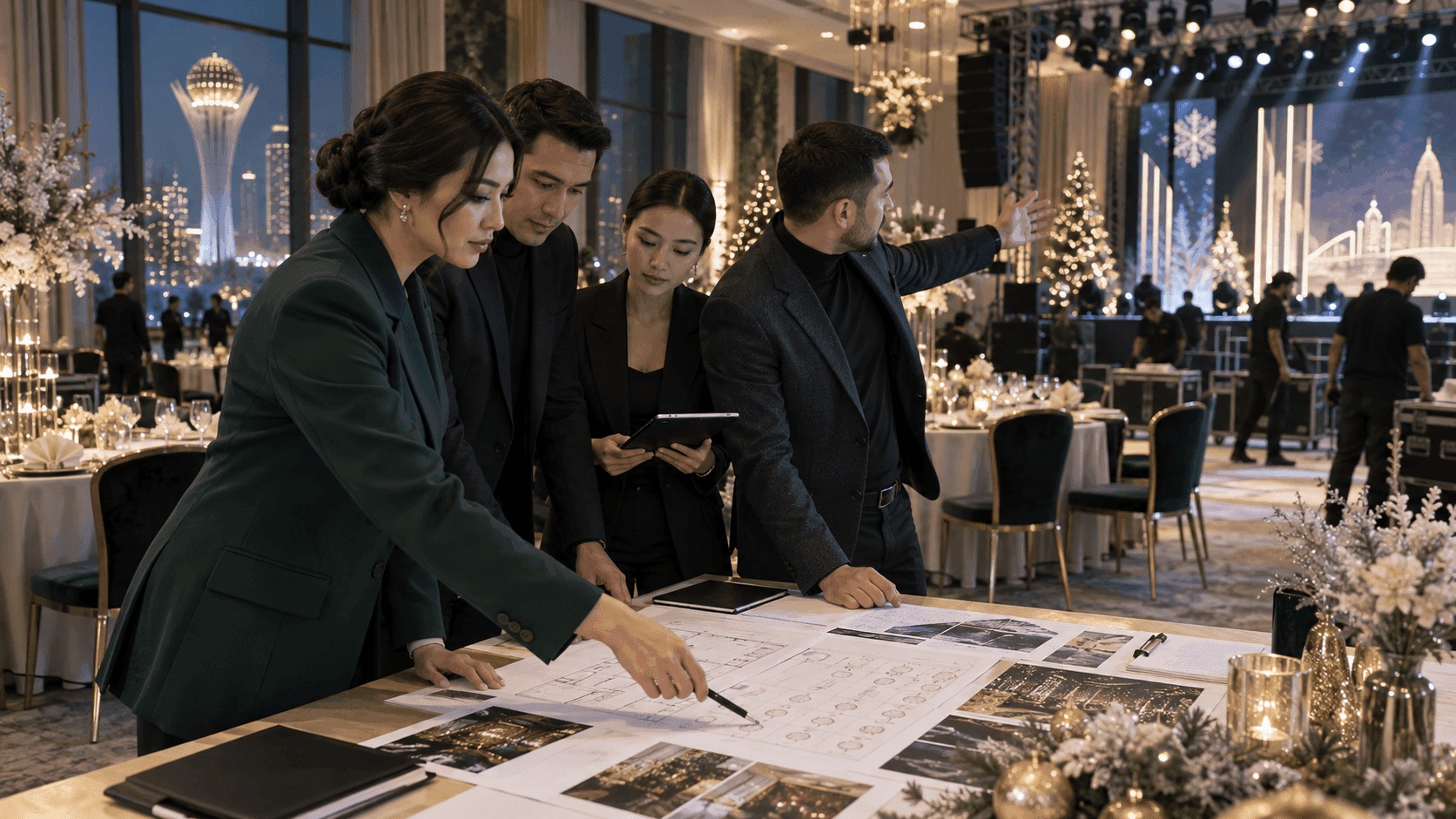
A successful New Year corporate event begins long before December. Large companies often start planning in August, when HR managers research the market, compare suppliers and define the first requirements for the evening. Beginning early gives the team the freedom to choose rather than settle for whatever remains available at the end of the season. It is possible to source a venue, host, performers, decorators and technical crew independently, but doing so requires considerable time and experience. Companies therefore often entrust the project to a professional event agency responsible not only for suppliers but also for the overall logic of the occasion. An event agency is more than an intermediary between a client and performers. It acts as project coordinator, script team, venue administrator and crisis manager on the day itself.
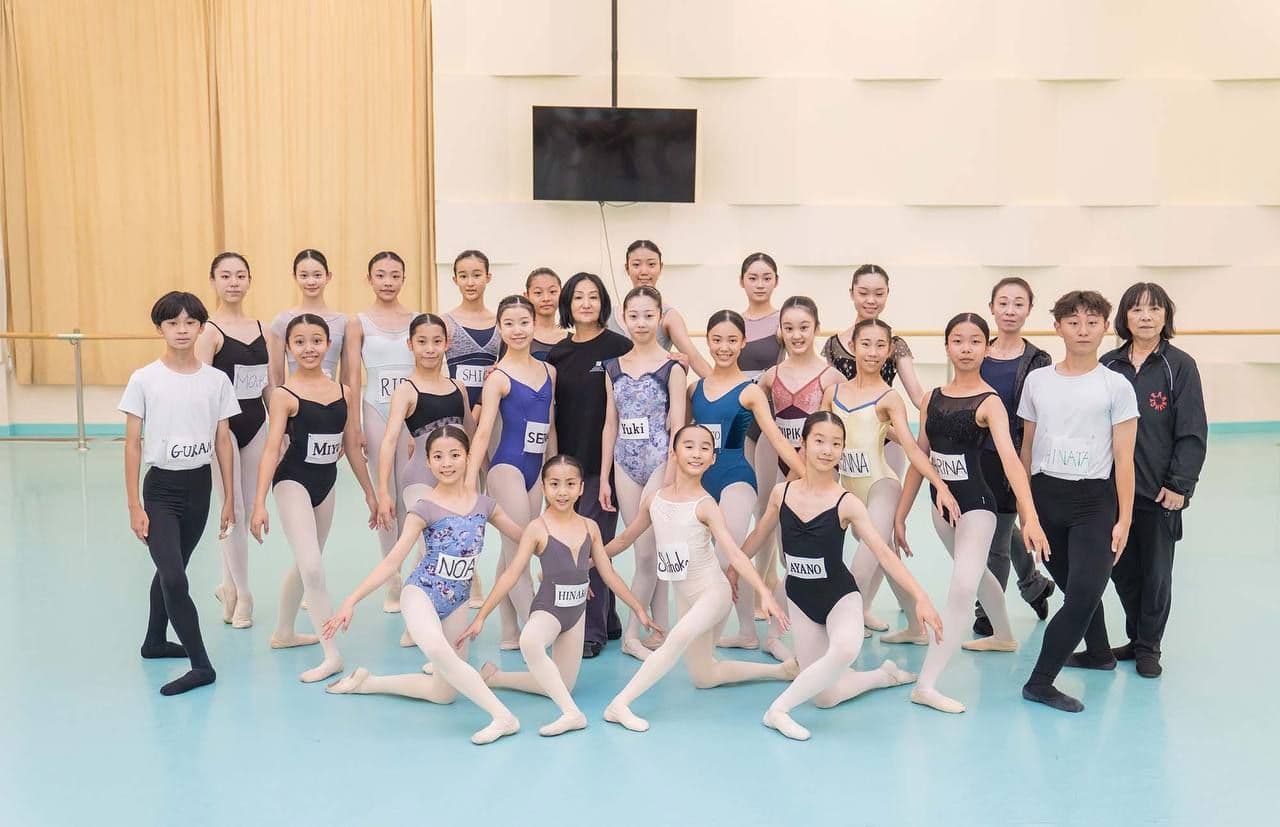
Japanese Delegation Concludes Visit to the Kazakh National Academy of Choreography
The Kazakh National Academy of Choreography has concluded an intensive programme for a delegation from Tokyo's Yoshiko Takagi Ballet School. Twenty-two students and four teachers travelled to Astana to explore Kazakhstan's approach to choreographic education, work with the Academy's leading teachers and exchange professional experience. The Japanese guests followed a focused educational programme. Young dancers took part in masterclasses in classical and folk-stage dance and worked on classical variations drawn from the world's ballet repertoire. Each class offered more than technical practice. It also allowed the students to view familiar elements through a different teaching tradition. For young artists, this kind of exchange broadens their professional outlook and encourages closer attention to every detail of stagecraft.